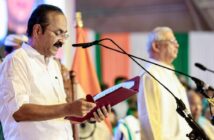
Sonbarsha (SC) Assembly Constituency (Vidhan Sabha) (Constituency No. 74), Bihar
Sonbarsha (SC) Assembly constituency, located in Sitamarhi district of north-central Bihar, is a socially significant and politically sensitive reserved seat shaped by its rural character, flood-prone geography, and strong Scheduled Caste presence. Bordering Nepal and lying within the Mithila region, Sonbarsha reflects the structural challenges of north Bihar—migration, agrarian stress, and infrastructure gaps—while also playing a role in broader Political trends in Bihar ahead of the Bihar Assembly elections 2025.
Bihar Assembly Elections 2025
Sonbarsha Assembly Election 2025 – Voting Date
Voting for the Bihar assembly elections 2025 for this constituency was completed on 11 November 2025, as part of Phase 2 of the 2025 Bihar Legislative Assembly election.
Sonbarsha Assembly Election 2025 Results
Ratnesh Sada of JD(U) wins by 97833 votes in the Sonbarsha seat in the 2025 Bihar Vidhan Sabha elections.
The counting of votes and declaration of results for the 2025 Bihar Assembly elections were completed on November 14, 2025.
Candidates List: Sonbarsha Assembly Election 2025
| S.N. | Candidate | Party | EVM Votes | Postal Votes | Total Votes | % of Votes |
|---|---|---|---|---|---|---|
| 1 | KIRAN DEVI | Bahujan Samaj Party | 5012 | 7 | 5019 | 2.43 |
| 2 | RATNESH SADA | Janata Dal (United) | 97606 | 227 | 97833 | 47.39 |
| 3 | SARITA DEVI | Indian National Congress | 84034 | 345 | 84379 | 40.87 |
| 4 | SATYENDRA KUMAR | Jan Suraaj Party | 5635 | 20 | 5655 | 2.74 |
| 5 | PARMOD SADA | Independent | 3986 | 12 | 3998 | 1.94 |
| 6 | RAJESH RAM | Independent | 4034 | 4 | 4038 | 1.96 |
| 7 | NOTA | None of the Above | 5516 | 6 | 5522 | 2.67 |
| Total | 205823 | 621 | 206444 |
1. Foundational Details
- District: Sitamarhi
- Lok Sabha Constituency: Sitamarhi
- Constituency Number: 74
- Seat Type: Reserved for Scheduled Castes (SC)
- Total Electors (2020): Approximately 3.12 lakh
- Voter Turnout (2020): Around 60%
Geography and Administrative Divisions
Sonbarsha lies in the northern belt of Sitamarhi district, close to the Indo–Nepal border. The constituency includes Sonbarsha, Parihar, and adjoining rural panchayats, governed through block offices and panchayati raj institutions. The terrain is flat, low-lying, and flood-prone, influenced by rivers such as the Bagmati and Lakhandei, which regularly overflow during the monsoon.
Road connectivity links Sonbarsha to Sitamarhi town and neighbouring blocks, but interior villages continue to struggle with poor drainage, damaged roads, and seasonal isolation. The location of the border affects trade, migration, and local policing dynamics.
Economic Base
The economy of Sonbarsha is primarily agrarian, with paddy, wheat, maize, and pulses as the main crops. Agriculture is heavily dependent on monsoon rains, as irrigation coverage remains limited.
Other key economic features include:
- Daily wage labour and farm work, especially among Scheduled Caste households
- Seasonal migration to Delhi, Punjab, Haryana, and Maharashtra
- Small-scale trade and rural services, including transport and local markets
Remittances from migrant workers play a critical role in sustaining household incomes.
2. Electoral History and Political Background
Sonbarsha has historically been a competitive reserved constituency, witnessing contests mainly between the Rashtriya Janata Dal (RJD) and Janata Dal (United), with the Bharatiya Janata Party (BJP) influencing outcomes through alliance politics. The seat often reflects broader alignments within Bihar constituencies rather than purely local factors.
Recent Assembly Election Results
| Election Year | Winning Candidate | Party | Runner-Up | Party | Margin (Votes) |
|---|---|---|---|---|---|
| 2020 | Sankar Mahato | JD(U) | Ratnesh Paswan | RJD | ~12,000 |
| 2015 | Ratnesh Paswan | RJD | Sankar Mahato | JD(U) | ~9,500 |
In the 2020 election, Sankar Mahato of JD(U) won the seat, reversing the 2015 result when Ratnesh Paswan (RJD) had secured victory. This alternating pattern underlines Sonbarsha’s status as a swing constituency, shaped by alliance equations and voter turnout rather than permanent party loyalty.
Historical Trends
Earlier, the seat was influenced by socialist parties and Congress, but over the past two decades, RJD and JD(U) have dominated contests. The reserved nature of the seat places Scheduled Caste leadership, welfare delivery, and local accessibility at the centre of electoral evaluation.
Sonbarsha frequently features in political developments in Bihar due to its location, caste composition, and electoral volatility.
Prominent Political Figures
- Sankar Mahato (JD-U): Sitting MLA, known for focus on rural roads, welfare access, and flood relief coordination.
- Ratnesh Paswan (RJD): Former MLA with strong grassroots support among Dalit communities.
Both figures are widely recognised among politicians representing reserved rural seats in Bihar.
3. Social and Economic Fabric
Demographic Composition
- Population: Approximately 4.1 lakh (projected from Census 2011)
- Urban–Rural Ratio: Over 90% rural
- Gender Ratio: Around 930 females per 1,000 males
- Literacy Rate: About 57%, below the state average
Caste and Community Profile
Sonbarsha is reserved for the Scheduled Castes, and SC communities form a decisive electoral bloc.
- Scheduled Castes: Paswan, Chamar, Musahar, and Dusadh communities dominate the voter base
- OBCs: Yadavs, Koeris, and Mallahs hold secondary influence
- Upper Castes: Numerically limited but socially visible
- Muslims: A small but locally significant minority
Livelihood Patterns
Most households depend on subsistence farming, wage labour, and income from migration. Women participate actively in agricultural work and self-help groups, though formal employment opportunities remain scarce.
Education beyond secondary level is limited, pushing youth toward migration or informal work.
4. Ground-Level Issues and Governance
Key Development Challenges
- Flooding and Waterlogging: Annual floods damage crops, homes, and roads
- Infrastructure Deficit: Poor rural roads, weak electricity supply, and sanitation gaps
- Employment and Migration: Lack of local jobs drives sustained out-migration
- Healthcare Access: Primary health centres are understaffed and under-equipped
- Education Quality: Shortage of teachers and higher education institutions
Governance and Representation
Under the current MLA, efforts have been made to improve road connectivity, housing access, and the delivery of welfare schemes. Central and state schemes such as PM Awas Yojana, Jal Jeevan Mission, Ujjwala, and PDS reforms have reached many households, though the quality of implementation varies widely.
Flood management and sustainable livelihood creation remain the most pressing unmet demands, frequently highlighted in Sonbarsha election news and in broader political news coverage in Bihar.
5. Political Actors and Party Dynamics
- JD(U): Strong among SC and EBC voters due to welfare-oriented governance
- RJD: Retains deep support among Dalits and sections of OBCs
- BJP: Influences outcomes through NDA alliance dynamics
- Congress: Marginal presence with limited organisational reach
Elections in Sonbarsha are shaped by candidate credibility, welfare delivery, and alliance strength, rather than ideology alone. These dynamics are closely tracked in the Bihar assembly election updates and Political updates in Bihar.
6. Strategic Electoral Analysis
Sonbarsha displays alternating voting behaviour, with margins often influenced by turnout levels and alliance consolidation. The SC-reserved status means representation quality and responsiveness matter more than party branding.
Booth-level patterns show higher turnout in rural clusters with dense SC populations. Any split in Dalit votes can decisively change outcomes, making the seat sensitive to Bihar election updates and broader coalition shifts.
As with several rural seats, Sonbarsha’s behaviour feeds into statewide narratives about political trends in Bihar during the Upcoming elections in India.
7. Forward-Looking Analysis
Sonbarsha’s future electoral trajectory will depend on how effectively governments address flood resilience, rural employment, and access to education. With rising youth awareness and expectations, voters increasingly demand accountability and tangible outcomes.
In the Bihar Assembly elections 2025, Sonbarsha is expected to remain competitive, contributing meaningfully to the overall picture reflected in the Bihar election results 2025, and the final 2025 Bihar election result, including Sonbarsha election results 2025.
FAQs About Sonbarsha (SC) Assembly Constituency
What is the reservation status of the Sonbarsha Assembly constituency?
Sonbarsha is officially designated as a Scheduled Caste (SC) reserved seat within the Bihar Legislative Assembly. This reservation ensures that only candidates from Dalit communities can contest, promoting political inclusion and representation. The seat was established to address the historical marginalization of these groups by giving them a dedicated legislative voice. It plays a crucial role in the region’s social justice framework, ensuring that specific community interests are debated in Patna. Consequently, the electoral battle here often centers on which party best serves the aspirations of the SC electorate.
Who is the current MLA of Sonbarsha?
Sankar Mahato, representing the Janata Dal (United) or JD(U), is the sitting MLA for the Sonbarsha constituency. He secured his position during the 2020 Bihar Assembly elections by defeating his nearest rivals in a closely watched contest. As a member of the ruling coalition’s party, his tenure focuses on implementing state-level welfare schemes at the local level. His performance is frequently evaluated by his ability to bring infrastructure projects to this rural border region. His victory in 2020 reinforced the JD(U)’s traditional stronghold and influence over local demographic blocks.
Which Lok Sabha constituency does Sonbarsha fall under?
Sonbarsha is one of the key assembly segments that comprise the Sitamarhi Lok Sabha constituency in north-central Bihar. Located near the sensitive Indo-Nepal border, this geographical positioning gives the area significant strategic and cultural importance. Being part of the Sitamarhi parliamentary seat means that local voters participate in both state-level and national-level political shifts. The coordination between the local MLA and the Member of Parliament (MP) is vital for major central government projects. This connection often dictates the flow of development funds related to national highways and border security measures.
What are the main issues faced by voters in Sonbarsha?
Voters in Sonbarsha primarily struggle with recurring annual floods caused by rivers flowing down from the Himalayan foothills in Nepal. This environmental challenge is compounded by high unemployment and a lack of industrial development, which forces youth to migrate. The constituency also faces significant gaps in the healthcare system, with residents often traveling long distances for basic medical care. Poor road connectivity in the interior rural pockets remains a persistent grievance among the local farming population. These systemic issues create a demanding environment for any representative seeking to maintain voter trust over multiple terms.
How has the political trend evolved in Sonbarsha?
The political landscape of Sonbarsha has historically been a volatile battleground between the JD(U) and the Rashtriya Janata Dal (RJD). It is considered a “swing” constituency where statewide alliances and local caste dynamics heavily influence the outcome. Over the last decade, voting patterns have shifted in line with the performance of the “Mahagathbandhan” and the NDA coalitions. Voter turnout in this region is typically high, reflecting a politically conscious population that holds its leaders accountable. This evolution shows a transition from traditional loyalties toward a more development-focused and alliance-driven electoral logic.
What drives the local economy in Sonbarsha?
The backbone of Sonbarsha’s economy is almost entirely dependent on subsistence agriculture and seasonal wage labor. Most households rely on cultivating crops such as paddy, wheat, and sugarcane, though these are frequently at risk of flooding. Due to the lack of local factories, remittances sent home by migrant workers in cities like Delhi or Mumbai are a vital financial lifeline. Regional trade is also bolstered by its proximity to the Nepal border, which facilitates a steady flow of small-scale commerce. However, the absence of modern food processing units limits the potential for higher income for the local farming community.
Why is Sonbarsha important in Bihar politics?
Sonbarsha serves as a critical barometer for rural and Dalit sentiment within the complex political fabric of Bihar. Its status as a border constituency means that issues of internal security and cross-border trade often enter the political discourse. Because it is a reserved seat, it acts as a primary indicator of how major parties are performing with the Scheduled Caste vote bank. The challenges of flood management and migration seen here are representative of the broader hurdles facing the entire state. Therefore, success in Sonbarsha is often viewed as a sign of a party’s resonance with the rural heartland of Bihar.