Karnataka SIR 2026: 110K Form 7 Applications
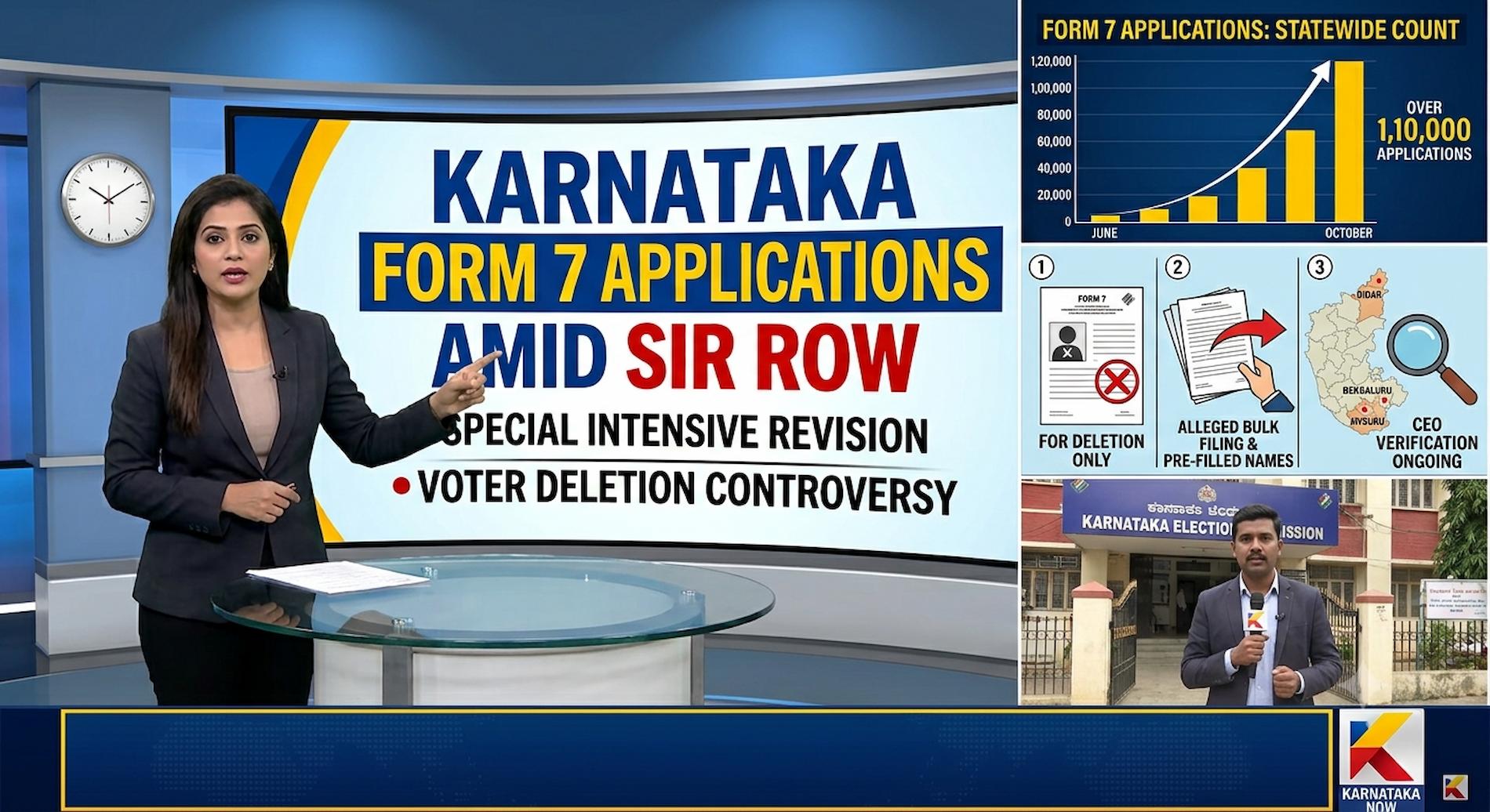
Karnataka’s electoral roll revision has entered a politically sensitive phase after officials reported 110,654 Form 7 applications seeking objections to voter entries or deletions. The figures have intensified the Congress-BJP dispute over voter protection, bulk submissions, and election transparency. With court proceedings underway and crucial October deadlines approaching, the focus is on verification, legal safeguards, and the final voter list.
Karnataka Receives 110K Form 7 Applications during the ongoing Special Intensive Revision (SIR) of electoral rolls, putting voter registration procedures and political accountability under renewed scrutiny. According to reports, the office of Karnataka Chief Electoral Officer V. Anbukkumar recorded 110,654 Form 7 applications as of October 9, 2026.
The figure has become a central issue in the Karnataka SIR controversy, with the Congress raising concerns about potentially targeted objections and the Bharatiya Janata Party (BJP) defending the revision exercise as a necessary step to identify irregularities. However, the number of applications does not establish how many objections are valid or how many voters, if any, should ultimately be removed.
The distinction matters because Karnataka had 45,161,393 registered electors as of October 9. Every objection must be examined through the prescribed legal process to protect eligible voters while maintaining accurate electoral records.
Key Takeaways
- Form 7 applications: Karnataka received 110,654 applications by October 9, 2026, according to the Chief Electoral Officer’s office.
- Registered electorate: The state had 45,161,393 registered voters, comprising 22,403,422 men, 22,755,113 women, and 2,858 transgender electors.
- SIR notices: Officials generated 4,382,315 notices and delivered 4,373,745, representing approximately 99.80% of the total.
- Pending hearings: Hearings had been completed in 4,088,099 delivered-notice cases, leaving 285,646 pending.
- Legal development: On October 9, 2026, the Karnataka High Court stayed further proceedings in criminal cases involving two BJP booth-level agents accused of submitting bulk Form 7 objections.
- Upcoming deadlines: October 12 was the reported final hearing date, October 22 the deadline for disposing of claims and objections, and October 27 the scheduled publication date for the final electoral roll.
What Are Form 7 Applications?
Understanding the voter objection process
Form 7 is the prescribed application used to object to an entry in an electoral roll or seek the deletion of an existing entry under the applicable election rules. It allows objections to be raised when a record may be ineligible, duplicated, or otherwise incorrect.
For example, a legitimate objection might concern a deceased elector whose name remains on the list or a duplicate registration that requires verification. However, submitting a form does not automatically establish that the objection is correct.
Electoral Registration Officers (EROs) must examine the information, issue the required notices, hear the relevant parties, and verify supporting records before deciding whether a deletion is justified.
The Karnataka Form 7 applications figure therefore represents applications received, not confirmed voter deletions.
Why the number matters
The reported 110,654 applications are part of a broader electoral registration exercise involving several types of applications. According to reports, Karnataka received 2,302,215 applications across four form categories between June 16 and October 8, 2026.
| Application type | Applications received |
|---|---|
| Form 6: New voter inclusion | 952,497 |
| Form 6A: Overseas Indian electors | 4,712 |
| Form 7: Objections or deletion requests | 110,654 |
| Form 8: Corrections and other updates | 1,234,352 |
| Total | 2,302,215 |
These figures illustrate the scale of the Karnataka electoral roll update 2026. Form 7 applications account for only one category within the wider registration process. The other forms address new registrations, eligible overseas Indian electors, corrections, address changes, and replacement voter identification cards.
Congress-BJP Dispute Over Voter Deletions
BJP defends the revision exercise
BJP Karnataka president B. Y. Vijayendra has defended the Special Intensive Revision, arguing that electoral roll verification is necessary to identify irregularities. He has also accused the Congress-led state government of using police cases to intimidate BJP workers involved in submitting objections.
These statements reflect the BJP’s position in the ongoing political dispute. They do not, by themselves, establish whether the applications under scrutiny were properly filed or whether any individual acted unlawfully.
The BJP Karnataka Form 7 allegations have added to tensions between the two parties, particularly over the role of booth-level agents in the electoral process.
Congress raises concerns about bulk objections
Congress leaders have questioned whether large-scale Form 7 submissions could be used to challenge legitimate voters’ registrations. The dispute has prompted complaints and police cases concerning applications submitted in Bengaluru’s Malleswaram constituency.
The allegations include objections relating to 778 electors in Ward 64 and 136 electors in Ward 45. Investigators and election authorities must establish the relevant facts before concluding the applications or the intentions of those who submitted them.
The Congress BJP voter list row raises a broader question: how can election officials prevent improper objections without discouraging legitimate complaints about inaccurate voter records?
The answer depends on consistent verification, transparent decisions, and safeguards that allow affected voters to respond.
Karnataka Voter Statistics and SIR Deadlines
Registered voters and notice figures
The size of Karnataka’s electorate makes the accuracy of the revision exercise particularly important. The following figures, reported for October 9, 2026, show the scale of the process.
| Voter category | Registered electors |
|---|---|
| Men | 22,403,422 |
| Women | 22,755,113 |
| Transgender voters | 2,858 |
| Total | 45,161,393 |
The broader SIR notice figures are separate from the number of Form 7 applications. Officials reported 4,382,315 notices generated, of which 4,373,745 had been delivered. Hearings had been completed in 4,088,099 cases, leaving 285,646 cases pending.
These numbers indicate substantial progress in the notice process, but pending cases still require timely attention. They should not be confused with confirmed voter deletions or the number of objections received through Form 7.
Important dates for the revision
The reported schedule sets out three significant dates for the remaining stages of the process:
- October 12, 2026: Final hearing date reported for the SIR process.
- October 22, 2026: Deadline for disposing of claims and objections.
- October 27, 2026: Scheduled publication of the final electoral roll.
These dates should be checked against the latest official Election Commission notification before publication or use for individual case planning.
Legal Safeguards and the High Court Case
Action against false declarations
A letter dated October 1, 2026, from the Chief Electoral Officer’s office reportedly raised concerns about bulk Form 7 submissions and the possibility of false declarations. The reported legal framework includes Section 31 of the Representation of the People Act, 1950, which addresses knowingly making false declarations in connection with electoral registration.
The reports also refer to an inquiry under Rule 20 of the Registration of Electors Rules, 1960, as a preliminary step. Any action must follow the applicable legal requirements, and a large number of submissions alone does not prove that the declarations were false.
The Election Commission of India SIR process must balance action against demonstrably false objections with fair treatment of applicants and registered electors.
Karnataka High Court stays proceedings
On October 9, 2026, the Karnataka High Court stayed further proceedings in criminal cases involving two BJP booth-level agents accused of submitting Form 7 objections concerning voters in Malleswaram. The cases related to the 778 electors in Ward 64 and 136 electors in Ward 45.
The petitions challenged the legality of the FIRs. The court’s interim order addressed the proceedings against the two agents; it should not be interpreted as a final ruling on the truth of the allegations or the validity of the disputed applications.
The Karnataka High Court Form 7 case is therefore an important procedural development, but the underlying questions about the applications remain distinct from the court’s interim intervention.
What Happens Next?
The next stage depends on the work of Electoral Registration Officers and other election officials. They must review the applications, notify the relevant parties, examine supporting documents, and decide whether each objection warrants action.
Readers following the Karnataka voter deletion controversy should watch for three developments:
- Whether officials accept or reject individual objections after verification.
- Whether complaints concerning allegedly false declarations lead to further lawful proceedings.
- Whether the final roll is published on schedule and reflects decisions made through the prescribed process.
The Karnataka Chief Electoral Officer and the Election Commission remain central to communicating the status of applications and ensuring that affected electors can participate in the process.
The central principle is straightforward: a Form 7 submission initiates scrutiny; it does not establish that a voter is ineligible. The outcome must rest on verified evidence and the applicable rules, not political allegations alone.
The Road Ahead
Karnataka’s electoral revision now faces a critical test of public confidence. The reported applications, pending hearings, and legal challenges underscore the need for accurate records and fair procedures. Election officials must resolve objections on evidence, communicate decisions clearly, and give affected voters the opportunity to respond. Political parties, meanwhile, should distinguish verified findings from allegations. The final electoral roll will provide a key measure of how effectively the authorities have balanced legitimate corrections with the protection of eligible voters’ rights.