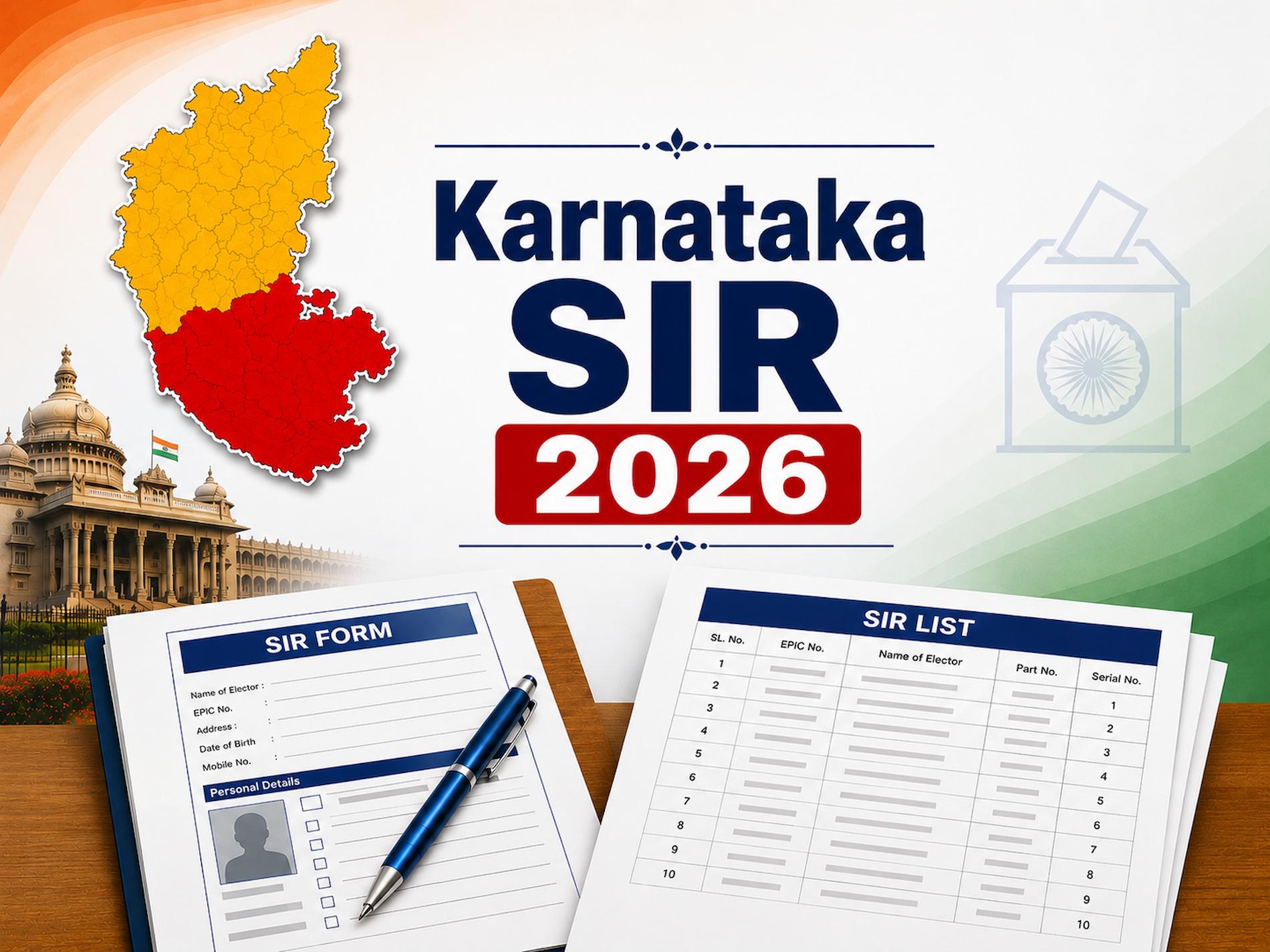
ASDDO List Shrinks by 2.41 Lakh; Dead and Duplicate Cases Increase
Karnataka’s voter-roll revision has recorded 2.41 lakh rollbacks from the ASDDO category after verification, while more than 1.08 crore electors remain flagged for further scrutiny ahead of the draft roll.
Karnataka SIR 2026 has entered a crucial verification phase after 2,41,082 electors were removed from the ASDDO category following checks by election officials and assistance from Booth Level Agents. The development is significant because the ASDDO list is dynamic and does not itself represent a final list of voters deleted from the electoral roll. The latest data show that the category had fallen to 1,08,75,304 electors as of August 12, from 1,11,16,386 on August 5.
The exercise is being closely watched by political parties and voters because the revised rolls will determine who remains included when the electoral revision progresses toward its next stages.
Key Takeaway
- 2.41 lakh rollbacks: The Office of the Chief Electoral Officer, Karnataka, reported 2,41,082 rollbacks since August 5, with 95,037 permanently shifted, 85,267 absent, and 80,492 classified under others among the corrected cases.
- 1.08 crore ASDDO electors: As of August 12, 1,08,75,304 electors remained in the ASDDO category, compared with 1,11,16,386 on August 5.
- Verification deadline: House-to-house verification has been extended to August 17, giving voters additional time to establish or correct their status.
- 83 lakh potential exclusion cases: More than 83 lakh voters marked as absent or shifted were reported as facing possible exclusion from the draft roll if their status is not resolved. The figure includes about 66.69 lakh shifted voters and 16.3 lakh absent voters.
- Draft roll: The draft electoral roll is scheduled for August 24 under the current reporting timeline, although the overall SIR schedule extends beyond the draft stage. The earlier announced final electoral roll date is October 7.
- Political scrutiny: Congress has raised concerns about possible voter exclusion, while BJP and JD(S) leaders have separately alleged procedural irregularities and sought stronger verification. These are political claims and should not be treated as established findings without official confirmation.
2.41 Lakh Voters Moved Out of the ASDDO Category
The biggest development in the latest Karnataka voter list revision is the rollback of 2,41,082 names from the ASDDO category.
Chief Electoral Officer V. Anbukkumar said the changes followed verification carried out after the ASDDO list was published. Booth Level Agents also assisted officials in checking voter records.
The correction is important because a voter appearing in the ASDDO category does not automatically mean that the person has been permanently removed from the electoral roll. Instead, the category identifies records requiring verification because of absence, relocation, death, duplication or other issues.
Latest ASDDO Numbers
The CEO’s office reported that Karnataka had 5,54,32,314 electors in the relevant dataset. Of these, 4,45,57,010, or 80.38%, had been digitized and included in the rolls, while 1,08,75,304, or 19.62%, remained in the ASDDO category as of August 12.
The latest category-wise figures were:
- Absent: 15,48,757
- Permanently shifted: 65,73,976
- Dead: 16,36,673
- Already enrolled/duplicate: 7,01,412
- Others or not willing to sign forms: 4,14,486
These numbers are a snapshot of an ongoing process and can change as verification continues.
What Is the ASDDO Category in Karnataka SIR?
ASDDO stands for Absent, Shifted, Dead, Duplicate, and Others. The category is being used during the Special Intensive Revision Karnataka exercise to identify electoral records requiring further verification.
Why ASDDO Status Matters
A voter being flagged does not by itself establish that the person is ineligible. The verification stage allows eligible electors to confirm their status or correct errors.
This distinction is particularly important because headlines suggesting that every voter in the ASDDO category has already been “deleted” can create unnecessary confusion. The supplied editorial brief also specifically advises describing the 2.41 lakh cases as voters moved out of the ASDDO list rather than permanently deleted.
Dead and Duplicate Categories See Changes
The latest data show substantial numbers in the dead and duplicate categories, with 16,36,673 electors listed as dead and 7,01,412 under the already enrolled or duplicate category as of August 12.
At the same time, the 2.41 lakh rollbacks demonstrate that the ASDDO numbers are not static. Records can move out of the category when officials receive information or verification establishes that the voter should remain in the roll.
This is why comparisons between the August 5 and August 12 figures need to be read carefully rather than interpreted as final deletions.
Bengaluru Has a Major Share of ASDDO Cases
Bengaluru has emerged as a major focus of the Karnataka electoral roll 2026 exercise because of its large and highly mobile population.
Earlier reports put Bengaluru’s electorate at roughly 1.03 crore, with a substantial number of records requiring verification. The latest CEO data also show significant ASDDO concentrations in Bengaluru-related areas, including BBMP South, BBMP North and Bengaluru Rural.
Why Urban Areas Face Verification Challenges
Large cities can produce more records requiring scrutiny because of:
- Frequent movement between rented and permanent residences
- Internal migration
- Multiple or outdated addresses
- Rapid urban expansion
- Difficulty completing door-to-door verification across large populations
These factors should be treated as possible administrative explanations rather than evidence of electoral fraud.
More Than 83 Lakh Voters Face Potential Draft-Roll Exclusion
One of the most closely watched figures in the Karnataka voter verification process is the more than 83 lakh voters marked as absent or shifted.
Reports indicate that around 66.69 lakh voters were classified as shifted and approximately 16.3 lakh as absent. Together, these groups account for more than 83 lakh electors who could face exclusion from the draft roll if their status is not resolved.
Potential Deletion Is Not Completed Deletion
This distinction is essential. The 83 lakh figure represents voters whose records require resolution and who may be excluded from the draft roll if they fail to establish their status. It does not mean that all 83 lakh voters have already been deleted.
The ongoing verification process is therefore central to the outcome.
Political Parties Raise Questions Over SIR
The voter-roll revision has also become a political issue in Karnataka.
Congress
Congress has expressed concern about the number of voters potentially facing exclusion and has sought additional physical verification in disputed cases. Such concerns should be attributed to the party rather than presented as independently established findings.
BJP and JD(S)
BJP and JD(S) leaders have alleged irregularities in the implementation of SIR and demanded greater scrutiny and door-to-door re-verification in areas where they claim procedural violations occurred. A July 6 NDA delegation involving BJP and JD(S) leaders submitted a complaint to the Karnataka CEO seeking an inquiry.
Election Commission
The Election Commission’s position is that the exercise involves verification and correction of electoral records. CEO V. Anbukkumar has also emphasized that voters should rely on the official CEO Karnataka website for the ASDDO list and warned against private websites publishing electoral information.
73 Lakh Pre-SIR Applications Add Context
Before the electoral rolls were frozen for the SIR exercise on June 16, the Election Commission had received about 73 lakh applications involving additions, shifting of residence, corrections, deletions and EPIC-related changes.
Reports said roughly 66.2 lakh applications had been processed and incorporated, about 6.7 lakh were rejected, and approximately 4,000 remained pending.
This shows the enormous volume of voter-record changes being handled alongside the SIR exercise.
What Voters Should Do Now
Voters who find their names flagged should verify their information through official election channels and contact the relevant Booth Level Officer or election authorities where necessary.
Forms 6 and 8 remain important mechanisms for electoral-roll changes, including new enrolment, shifting residence and corrections. The objective is to ensure eligible voters have an opportunity to resolve discrepancies before the relevant roll is finalized.
What Happens Next?
The broad process can be understood as:
ASDDO identification → Voter verification → Corrections and claims → Draft electoral roll → Claims and objections → Final electoral roll
The immediate deadline is August 17 for the extended house-to-house verification process. The draft roll is scheduled for August 24, while the previously announced final electoral roll publication date is October 7.
The latest 2.41 lakh rollback therefore represents an interim correction, not the outcome of the revision.
Karnataka SIR 2026: Key Figures and Dates
| Particular | Latest reported figure/date |
|---|---|
| Total Karnataka electors | 5,54,32,314 |
| Digitized electors | 4,45,57,010 |
| ASDDO electors on August 12 | 1,08,75,304 |
| ASDDO electors on August 5 | 1,11,16,386 |
| Voters moved out of ASDDO | 2,41,082 |
| Permanently shifted | 65,73,976 |
| Absent | 15,48,757 |
| Dead | 16,36,673 |
| Duplicate/already enrolled | 7,01,412 |
| Verification deadline | August 17, 2026 |
| Draft electoral roll | August 24, 2026 |
| Final electoral roll | October 7, 2026 |
Source figures are based on the latest CEO Karnataka information reported by The New Indian Express and other leading reports; because verification remains underway, figures may change.
Conclusion
The latest Karnataka SIR 2026 figures show why the voter-verification stage matters. The rollback of 2,41,082 electors demonstrates that ASDDO classifications can change after verification, while more than 1.08 crore records remain subject to the continuing process.
For voters, the key priority is to check their status through official channels and resolve discrepancies before the applicable deadlines. For political parties, the process remains an important test of electoral transparency and accuracy.
Stay informed, verify your voter status, and rely on official Election Commission updates before the draft roll is published.