Rajasthan Draft Roll Adds 11 Lakh Voters
Rajasthan’s latest draft electoral roll contains more than 5.26 crore voters, around 11.47 lakh above the final list published after the intensive revision exercise. The difference has renewed attention on voter verification, separate election authorities, and the process voters must follow before the final roll is published in January 2027.
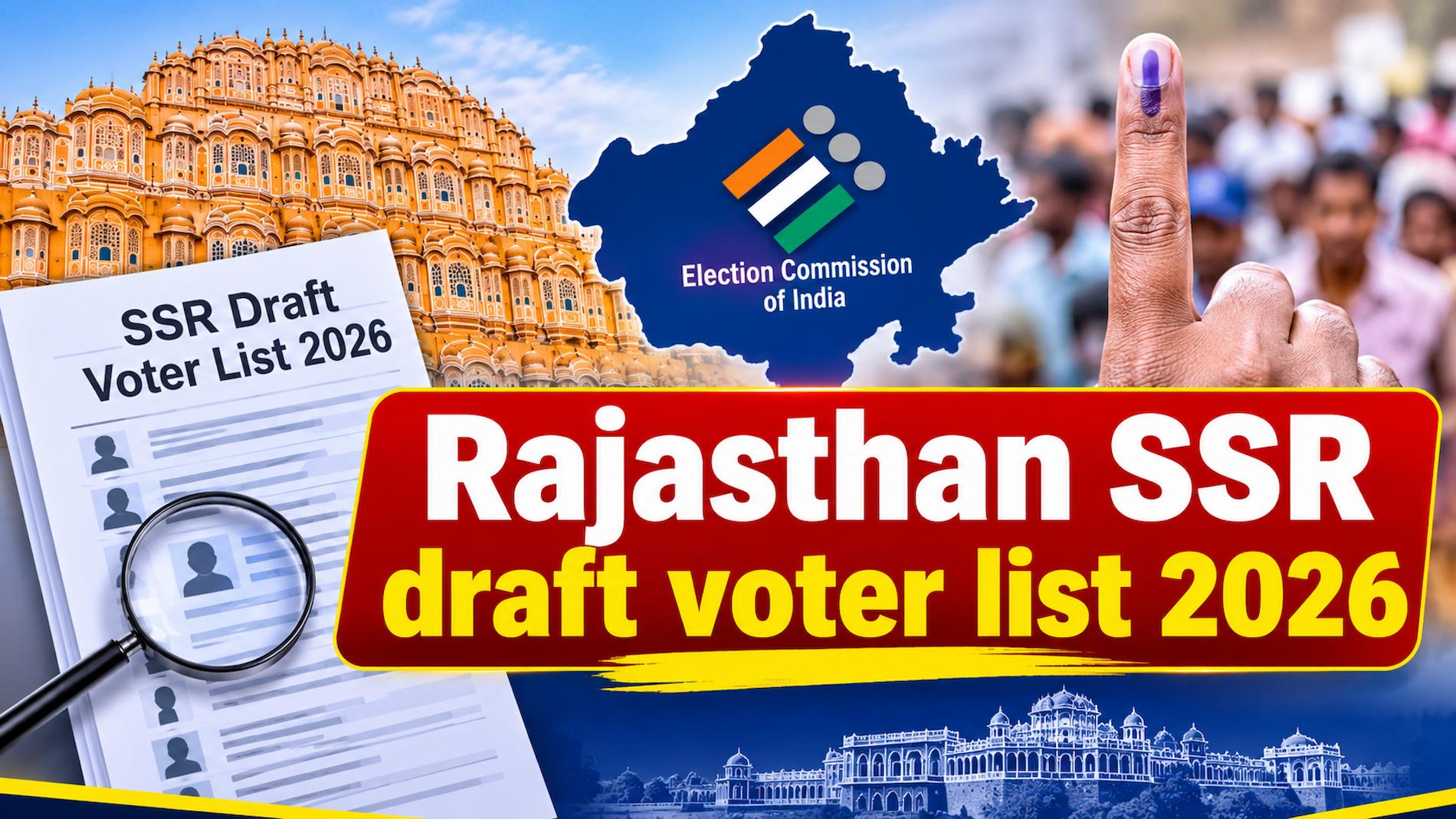
Rajasthan’s voter data has become a major political and administrative talking point after the draft electoral roll published on November 12, 2026, recorded 5,26,67,416 voters. That is 11,47,487 more than the final electorate published after the February 2026 Special Intensive Revision (SIR). The Rajasthan SSR draft voter list 2026 therefore raises an important question: why do different electoral rolls for the state show noticeably different voter totals?
The figures need careful interpretation. The rolls were prepared at different times, under different revision processes, and for different election purposes. The discrepancy alone does not establish that voters were wrongly added or removed. However, it makes transparent verification essential, particularly before the final roll is scheduled for publication on January 4, 2027.
Key Takeaways
- Draft roll date: Rajasthan published its Special Summary Revision (SSR) 2027 draft electoral roll on November 12, 2026, with 5,26,67,416 voters.
- Difference from SIR: The draft contains 11,47,487 more voters than the final SIR electorate of 5,15,19,929 published in February 2026.
- Earlier electorate: Before SIR, Rajasthan had 5,46,56,215 voters. The intensive exercise reportedly removed approximately 44.28 lakh entries and added around 12.91 lakh.
- Gender breakdown: The SSR draft lists 2,75,24,780 male voters, 2,51,42,052 female voters, and 584 transgender voters.
- Claims period: Voters can submit claims and objections from November 12 to December 11, 2026. The disposal deadline is December 28.
- Final publication: The final electoral roll is scheduled for January 4, 2027, with January 1, 2027, as the qualifying date.
Why Are There Three Different Voter Counts?
The central issue behind the Rajasthan SSR News 2026 is that three different electoral-roll figures have circulated within a relatively short period. The latest draft is higher than the February SIR roll but lower than the State Election Commission’s older list used for local election preparations.
Comparing the three lists
| Electoral roll | Approximate voter count | Reference period |
|---|---|---|
| Final SIR roll | 5.15 crore | February 2026 |
| State Election Commission roll | 5.45 crore | Older pre-SIR base |
| SSR 2027 draft roll | 5.27 crore | November 12, 2026 |
These figures relate to different revision exercises and electoral purposes. The SEC’s local-election roll was based on an earlier Election Commission list, last updated on January 1, 2025, according to the SEC secretary. That explains why the SEC figure did not automatically reflect the later SIR exercise. It does not, by itself, settle whether every individual entry across the lists is accurate.
The 11 lakh voter difference Rajasthan refers specifically to the gap between the SSR draft’s 5,26,67,416 voters and the final SIR roll’s 5,15,19,929. The SEC figure is a separate comparison: at approximately 5.45 crore, it is around 18 lakh higher than the SSR draft and nearly 30 lakh higher than the final SIR roll.
This is why the Rajasthan voter count 2026 should not be discussed as though every figure represents the same list at the same point in time. The purpose, reference date, and revision method matter.
Understanding SIR and SSR
The two revision exercises have different methods. The Special Intensive Revision Rajasthan process involved extensive verification of existing voter entries, including enumeration and checks by Booth Level Officers (BLOs). The final roll published in February 2026 contained 5,15,19,929 electors.
The Special Summary Revision Rajasthan process, by contrast, starts with the existing electoral roll and invites applications for additions, deletions, and corrections. It provides a scheduled public opportunity to update records before the final list is published.
What changed during SIR?
Rajasthan had 5,46,56,215 voters before the intensive exercise. During the process, approximately 44.28 lakh entries were removed, and around 12.91 lakh new voters were added. The final electorate stood at 5,15,19,929, representing a net reduction of 31,36,286 from the pre-revision total.
The SSR draft now shows an increase of 11,47,487 compared with that February final roll. This increase should not automatically be described as 11.47 lakh newly eligible voters. It is the difference between two published totals, and the draft remains open to scrutiny and correction.
Male and Female Voter Breakdown
The latest draft also provides a gender-wise picture of Rajasthan’s electorate. According to the Chief Electoral Officer’s figures, male voters account for the larger share, while the list includes 584 transgender voters.
| Voter category | SSR draft count |
|---|---|
| Male | 2,75,24,780 |
| Female | 2,51,42,052 |
| Transgender | 584 |
| Total | 5,26,67,416 |
The Rajasthan male female voter data shows a difference of 23,82,728 between male and female electors. These numbers are useful for understanding voter registration patterns, but they do not indicate likely voting behavior or political preference.
Political Reactions and Accountability Questions
The latest Rajasthan election news latest has brought voter-roll transparency back into the political debate. Congress national spokesperson Pooja Tripathi questioned the accountability of the revision process and stressed that eligible citizens should not lose their voting rights because of discrepancies in electoral records. Her concerns should be treated as a political response, not as proof that the latest draft contains wrongful entries.
The Rajasthan Congress reaction focuses on the need for clarity about additions, deletions, and coordination between election authorities. The Bharatiya Janata Party (BJP) is the governing party in Rajasthan, but a specific response from a named BJP representative to this latest 11.47 lakh difference was not established in the material available for this article. It would be inaccurate to attribute a formal explanation or position to the party without a direct statement.
The BJP Rajasthan government will also face questions about how state-level and local election records are maintained, although the Election Commission of India and the State Election Commission have distinct responsibilities. The Election Commission’s published schedule and the SEC’s explanation about using an older roll are important parts of the context.
The key public-interest questions are straightforward:
- How are additions and deletions checked at the individual voter level?
- Can voters easily identify whether their names are missing or incorrectly recorded?
- How are records reconciled when separate authorities use electoral rolls for different purposes?
- Are claims and objections being processed within the announced deadlines?
- Will the final roll provide a clear and accurate record before it is published?
The Rajasthan electoral roll revision process must answer these questions through accessible records, timely decisions, and clear communication. The Rajasthan Election Commission news should therefore be followed not only for headline voter totals but also for information about how individual applications are handled.
How Voters Can Check and Correct Their Names
The draft publication has opened a formal period for citizens to check their details. Voters should not wait until the final list appears if they find a missing name, an incorrect entry, or a record that should be reviewed.
Important SSR 2027 dates
| Activity | Date |
|---|---|
| Draft roll published | November 12, 2026 |
| Claims and objections | November 12 to December 11, 2026 |
| Disposal deadline | December 28, 2026 |
| Final roll scheduled | January 4, 2027 |
| Qualifying date | January 1, 2027 |
The schedule follows the Election Commission’s SSR instructions issued on October 15, 2026, under Section 21 of the Representation of the People Act, 1950.
Forms and submission options
- Form 6: Apply to include a name in the electoral roll. Eligible young people who turn 18 on or before January 1, 2027, can apply.
- Form 7: Request deletion of an entry or submit an objection to an existing entry.
- Form 8: Request correction of details or other permitted changes.
Applications can be submitted through the Voters’ Service Portal, the ECINet app, or a local Booth Level Officer. Voters should keep their application details and check the status of their request.
The Rajasthan voter list January 2027 will be the final version after the claims and objections process is completed. Until then, the November draft is provisional. Citizens should verify their own entries rather than rely only on the overall state-level count.
The Rajasthan SSR draft voter list 2026 is therefore best understood as a provisional update following the intensive exercise, not as a final resolution of every question about the state’s voter records. Its publication provides another opportunity to verify names and correct errors before the January deadline.
As the claims process moves forward, the Rajasthan SSR draft voter list 2026 will remain subject to additions, deletions, and corrections based on applications and official verification. The final publication will provide a clearer basis for assessing the state’s updated electorate.
Trust Before the Ballot
A reliable voter roll depends on accurate records and a process that gives every eligible citizen a fair chance to be included. Rajasthan’s latest draft is not the final word on the state’s electorate. The coming weeks offer voters an opportunity to check their details, submit corrections, and raise objections. Election officials must examine applications carefully and publish the final list on schedule. Public confidence will be strengthened by clear explanations, consistent records, and equal access to the voting process across the state for all.