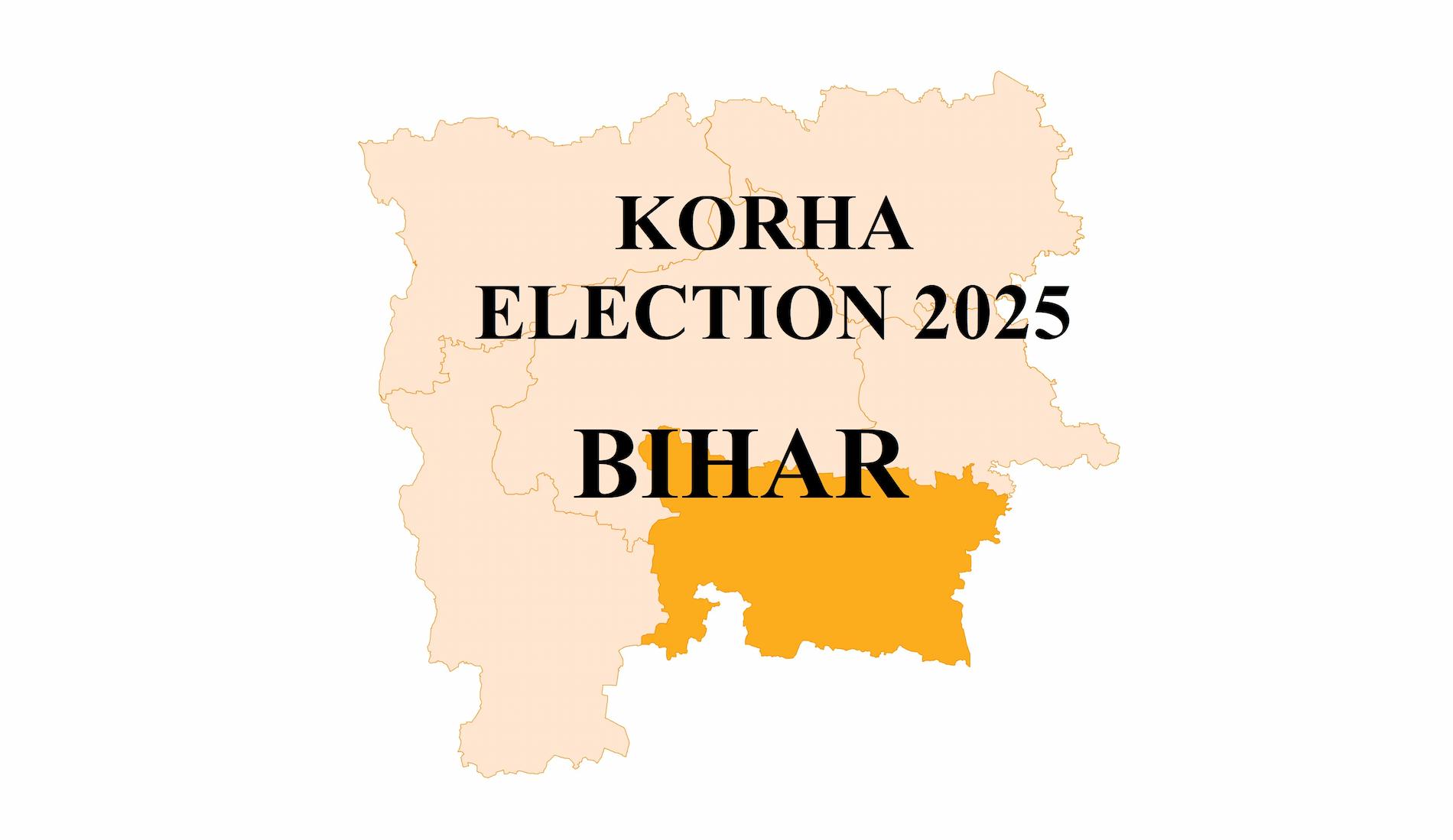
Korha Assembly Constituency (SC) (Vidhan Sabha) (Constituency No. 69), Bihar
Korha Assembly constituency, reserved for Scheduled Castes, is a predominantly rural seat located in Katihar district of eastern Bihar. The constituency is shaped by its agrarian economy, flood-prone geography, and high dependence on welfare support. Korha occupies an important place among Bihar constituencies, reflecting the socio-economic challenges of Seemanchal and the evolving nature of caste-based and development-oriented politics in the region. As Bihar prepares for the Bihar Assembly elections 2025, Korha remains a closely watched constituency in eastern Bihar.
Bihar Assembly Elections 2025
Korha Assembly Election 2025 – Voting Date
Voting for the Bihar assembly elections 2025 for this constituency was completed on 11 November 2025, as part of Phase 2 of the 2025 Bihar Legislative Assembly election.
Korha Assembly Election 2025 Results
Kavita Devi of the BJP wins by 123495 votes in the Korha seat in the 2025 Bihar Vidhan Sabha elections.
The counting of votes and declaration of results for the 2025 Bihar Assembly elections were completed on November 14, 2025.
Candidates List: Korha Assembly Election 2025
| S.N. | Candidate | Party | EVM Votes | Postal Votes | Total Votes | % of Votes |
|---|---|---|---|---|---|---|
| 1 | KAVITA DEVI | Bharatiya Janata Party | 123375 | 120 | 123495 | 51.82 |
| 2 | PUNAM KUMARI | Indian National Congress | 101052 | 186 | 101238 | 42.48 |
| 3 | RAVINDRA KUMAR | Bahujan Samaj Party | 1466 | 3 | 1469 | 0.62 |
| 4 | TUFANI DAS | Peoples Party of India (Democratic) | 913 | 1 | 914 | 0.38 |
| 5 | NIRMAL KUMAR RAJ | Jan Suraaj Party | 3992 | 36 | 4028 | 1.69 |
| 6 | KAPILDEV PASWAN | Independent | 1398 | 7 | 1405 | 0.59 |
| 7 | WAKIL DAS | Independent | 1229 | 19 | 1248 | 0.52 |
| 8 | VINOD KUMAR MIRDHA | Independent | 1345 | 1 | 1346 | 0.56 |
| 9 | NOTA | None of the Above | 3158 | 4 | 3162 | 1.33 |
| Total | 237928 | 377 | 238305 |
1. Foundational Details
- District: Katihar
- Lok Sabha Constituency: Katihar
- Constituency Number: 69
- Seat Type: Reserved for Scheduled Castes (SC)
- Total Electors (2020): Approximately 3.25 lakh
- Voter Turnout (2020): Around 56%
Geography and Administrative Divisions
Korha lies in the southern part of Katihar district and includes the Korha Community Development Block along with several adjoining rural panchayats. The region is part of the Kosi–Mahananda river basin, making it highly susceptible to annual flooding and waterlogging. The terrain is flat and fertile but suffers from poor drainage and weak embankments.
Road connectivity links Korha to Katihar town and neighbouring blocks, though many interior villages remain cut off during monsoon months. The constituency is administered through panchayati raj institutions, block offices, and district-level governance structures headquartered in Katihar.
Economic Base
Korha’s economy is largely agriculture-dependent, with paddy, maize, and jute as key crops. Small and marginal farmers dominate landholding patterns. Agricultural labour, daily wage work, and public employment schemes provide supplementary income.
Seasonal migration to urban centres in Bihar and other states is widespread due to limited local employment opportunities. Small trading activities, weekly haats, and dairy farming support the rural economy but remain underdeveloped.
2. Electoral History and Political Background
Korha has witnessed competitive electoral contests, primarily between the Rashtriya Janata Dal (RJD), Janata Dal (United), and Bharatiya Janata Party (BJP), with outcomes often influenced by caste consolidation and welfare delivery. The reserved status of the seat makes Scheduled Caste voters decisive, though broader alliance politics also play a major role.
Recent Election Results
| Year | Winning Candidate | Party | Runner-Up | Party | Margin (Votes) | Turnout (%) |
|---|---|---|---|---|---|---|
| 2020 | Kavita Devi | BJP | Punam Paswan | INC | 28,943 | 56.0 |
| 2015 | Punam Paswan | INC | Mahesh Paswan | BJP | 21,009 | 58.2 |
In the 2020 Bihar Assembly elections, Kavita Devi of the BJP won Korha by a decisive margin, defeating Congress candidate Punam Paswan. The result marked a shift from the previous election, when Congress had secured the seat, highlighting changing voter preferences in the region.
Historical Trends
Historically, Korha alternated between Congress and RJD influence, particularly during the 1990s and early 2000s. Over the last decade, the NDA alliance has expanded its footprint by combining welfare delivery with organisational strength. Voting behaviour in Korha reflects a blend of caste loyalty, local leadership credibility, and access to government schemes, a pattern visible across eastern Bihar.
Prominent Political Figures
- Kavita Devi (BJP): Sitting MLA, associated with welfare outreach and women-centric schemes.
- Punam Paswan (INC): Former MLA with strong grassroots support among Scheduled Castes and rural voters.
These leaders continue to shape the Korha elections news and influence campaign narratives in the constituency.
3. Social and Economic Fabric
Demographic Composition
- Population: Approximately 4.6 lakh (projected from Census 2011).
- Urban–Rural Ratio: Nearly 95% rural.
- Gender Ratio: Around 920 females per 1,000 males.
- Literacy Rate: About 54%, below the state average.
Caste and Community Profile
Korha’s electorate is dominated by Scheduled Castes, particularly Paswan and other Dalit communities.
- Scheduled Castes: Form the core voting bloc due to reservation status.
- OBCs and EBCs: Include Yadav, Nonia, and Teli groups, influencing margins.
- Muslims: A significant minority presence in select panchayats.
- Upper Castes: Numerically smaller, with limited electoral influence.
Livelihoods
Agriculture and wage labour are the primary sources of income. Public welfare programmes, migration-based remittances, and informal rural employment sustain households. Youth unemployment and underemployment remain persistent concerns.
4. Ground-Level Issues and Governance
Key Development Challenges
- Flooding and Waterlogging: Annual floods damage crops, homes, and roads.
- Infrastructure Deficit: Poor road connectivity and weak electricity supply in rural areas.
- Employment: Limited non-farm jobs lead to large-scale migration.
- Education and Healthcare: Schools and health centres face staff shortages and inadequate facilities.
- Welfare Delivery: Dependence on ration distribution, housing schemes, and pensions remains high.
Governance and MLA Performance
The sitting MLA’s tenure has focused on welfare scheme implementation, including housing, cooking gas, and drinking water initiatives. While coverage has expanded, residents continue to demand durable flood-control measures, better schools, and local employment opportunities.
Public sentiment ahead of the Bihar Assembly elections 2025 reflects cautious expectations, balancing welfare continuity with aspirations for long-term development.
5. Political Actors and Party Dynamics
- BJP: Currently dominant, backed by NDA organisational strength and welfare messaging.
- Congress: Retains influence among traditional Dalit voters and rural households.
- RJD: Appeals to sections of OBCs and minority communities.
- JD(U): Plays a supportive role within alliance politics.
Electoral competition in Korha is shaped by political developments in Bihar, alliance equations, and the ability of candidates to mobilise Scheduled Caste voters effectively.
6. Strategic Electoral Analysis
Korha’s electorate is welfare-sensitive and development-aware. While caste identity remains central due to the seat’s reserved nature, voters increasingly assess leadership on accessibility and delivery of benefits. Booth-level trends show higher turnout in flood-affected rural areas where welfare dependence is strongest.
As part of broader Political trends in Bihar, Korha reflects the eastern region’s shift toward performance-based evaluation, even within reserved constituencies. These dynamics are closely followed in political news in Bihar and the ongoing Bihar assembly election updates.
7. Forward-Looking Analysis
Korha’s future political trajectory depends on how effectively governments address flood management, rural infrastructure, and employment generation. Rising youth awareness and migration pressures are gradually reshaping voter priorities.
In the context of the Upcoming elections in India, Korha will test whether welfare-driven politics can transition into sustainable development-led governance. The outcome will also influence perceptions around Politicians in Bihar and their responsiveness to marginalised communities.
FAQs About the Korha Assembly Constituency
What is the reservation status of the Korha Assembly constituency?
Korha is a Scheduled Caste (SC) reserved seat in the Bihar Legislative Assembly, specifically designed to ensure representation for Dalit communities. This reservation status mandates that only candidates from the SC category can contest elections here, promoting inclusivity in a region with significant marginalised populations. The seat underscores Bihar’s commitment to affirmative action in politics, balancing diverse social groups. Voter demographics in Korha heavily feature SC communities, influencing campaign strategies around their specific needs. Such reserved seats play a crucial role in addressing historical underrepresentation. Overall, Korha’s status reflects broader efforts to integrate Dalit voices into state governance.
Who is the current MLA of Korha?
Kavita Devi of the BJP is the current MLA of Korha, having secured victory in the 2020 Bihar assembly election. Her win marked a continuation of NDA’s influence in the constituency amid competitive polling. As a relatively new face in state politics, she focuses on local development and welfare schemes. Devi’s tenure has emphasised connectivity, education, and community outreach programs. Voter feedback often highlights her engagement with SC-dominated areas. She remains a key figure in upcoming electoral discussions for the region.
Which Lok Sabha constituency does Korha fall under?
Korha Assembly constituency is part of the Katihar Lok Sabha constituency in eastern Bihar, linking local assembly politics to national parliamentary representation. This alignment means development funds and national schemes often flow through Katihar’s MP to benefit Korha. The connection influences voter priorities, blending state-specific issues with broader national narratives. Campaigns in Korha frequently reference Lok Sabha incumbents’ performance. It creates a layered political ecosystem where assembly results can signal Lok Sabha trends. Geographically, this places Korha within Seemanchal’s dynamic electoral landscape.
What are the major issues affecting Korha voters?
Flooding remains a perennial challenge in Korha, devastating agriculture and displacing communities during monsoons. Unemployment hits hard, particularly among youth lacking skill-based opportunities in a rural economy. Poor infrastructure, including roads and electricity, hampers daily mobility and economic growth. Limited access to quality healthcare and education facilities exacerbates vulnerabilities for SC populations. These interconnected issues drive voter demands for targeted government intervention. Addressing them is central to any political platform in the area.
How has Korha’s political trend evolved?
Korha has shifted between Congress and NDA dominance over the years, mirroring Bihar’s volatile alliance politics. Early elections saw Congress leverage its social justice base among SC voters effectively. The rise of NDA, especially the BJP and allies, brought a focus on development and welfare delivery post-2010. Voter expectations have evolved from caste-based appeals to tangible outcomes like infrastructure. Recent polls reflect the NDA’s edge through strong organisation and minority outreach. This evolution highlights changing dynamics in reserved seats.
What factors will influence the Korha elections results 2025?
Voter response to welfare delivery, such as direct benefit transfers and housing schemes, will be pivotal in Korha’s 2025 elections. Effective flood control measures and embankment repairs can sway rural sentiments significantly. Local leadership credibility, especially on ground-level accessibility, remains a key decider. Alliance stability and candidate selection will impact SC consolidation. Economic recovery post-floods and youth employment promises could tip the scales. Turnout among marginalised groups will ultimately shape the outcome.
Why is Korha important in the Bihar election discussions?
Korha highlights how reserved constituencies respond to governance, making it a focal point in Bihar election updates and political analyses. It exemplifies SC voter priorities in welfare, infrastructure, and flood mitigation. Results here influence narratives around NDA’s hold in Seemanchal and opposition strategies. Media tracks Korha for insights into Political updates in Bihar and statewide trends. Debates on political developments in Bihar often reference its margins and turnout. As a microcosm, Korha shapes broader conversations on inclusivity and development.