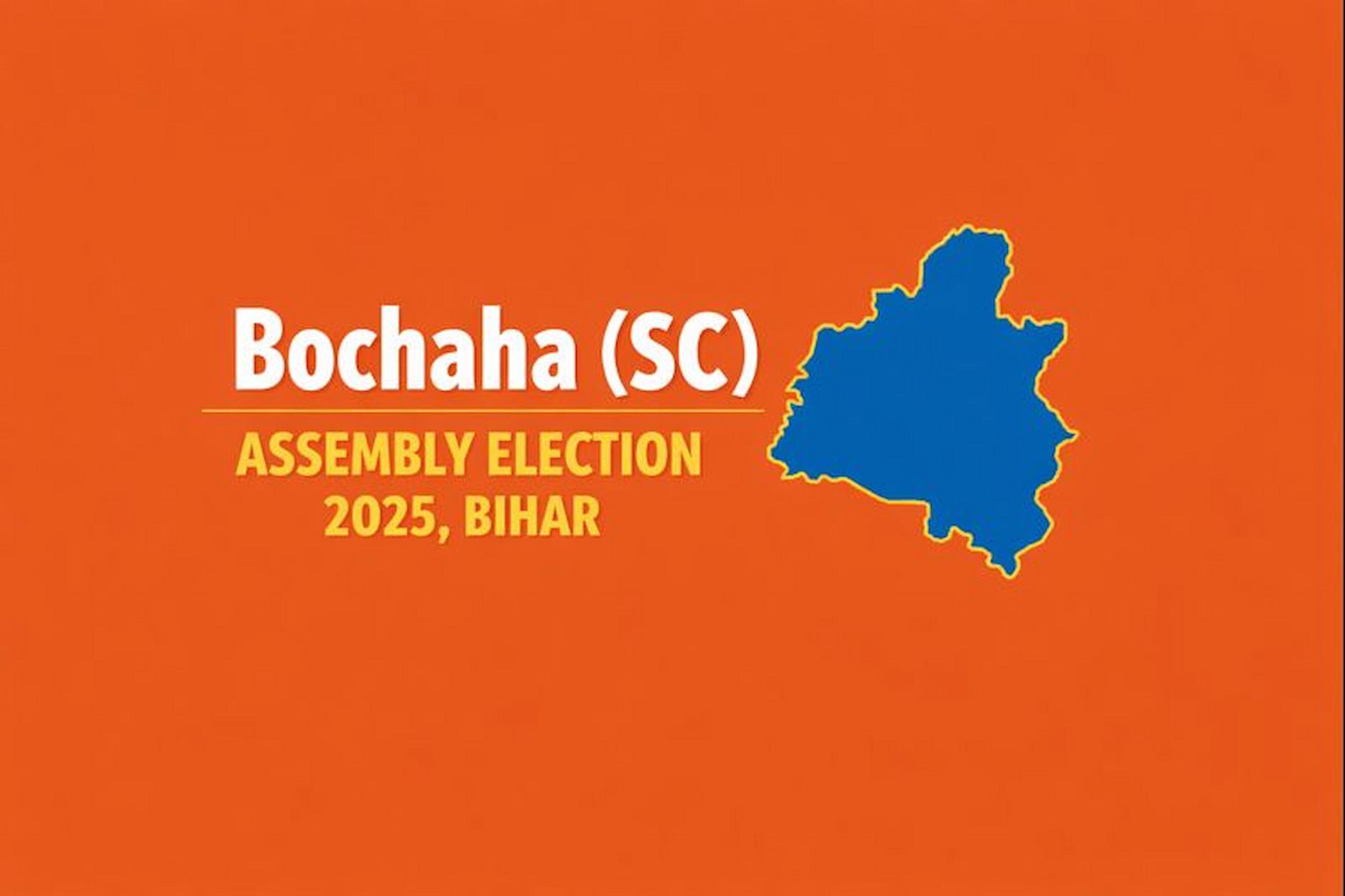
Bochaha (SC) Assembly Constituency (Vidhan Sabha) (Constituency No. 91), Bihar
Bochaha Assembly constituency, reserved for Scheduled Castes, is located in Muzaffarpur district in north Bihar. Within the broader landscape of Bihar constituencies, Bochaha reflects the social diversity, agrarian dependence, and welfare-driven politics that shape much of rural north Bihar. The seat has gained attention in recent cycles due to close contests, shifting alliances, and active grassroots mobilisation. With the Bihar Assembly elections 2025 approaching, Bochaha is expected to remain a closely watched constituency in district-level calculations.
Bihar Assembly Elections 2025
Bochaha Assembly Election 2025 – Voting Date
Voting for the Bihar assembly elections 2025 for this constituency was completed on 11 November 2025, as part of Phase 2 of the 2025 Bihar Legislative Assembly election.
Bochaha Assembly Election Result 2025
BABY KUMARI of Lok Janshakti Party (Ram Vilas) won by 108186 votes in the Bochaha seat in the 2025 Bihar Vidhan Sabha elections.
The counting of votes and declaration of results for the 2025 Bihar Assembly elections were completed on November 14, 2025.
Candidates List: Bochaha Assembly Election 2025
| S.N. | Candidate | Party | EVM Votes | Postal Votes | Total Votes | % of Votes |
|---|---|---|---|---|---|---|
| 1 | DR. ABHAY KUMAR | Aam Aadmi Party | 2725 | 6 | 2731 | 1.25 |
| 2 | AMAR KUMAR PASWAN | Rashtriya Janata Dal | 87508 | 362 | 87870 | 40.15 |
| 3 | BABY KUMARI | Lok Janshakti Party (Ram Vilas) | 107892 | 294 | 108186 | 49.43 |
| 4 | RAHUL KUMAR | Bahujan Samaj Party | 1972 | 4 | 1976 | 0.9 |
| 5 | UMESH KUMAR RAJAK | Jan Suraaj Party | 5207 | 48 | 5255 | 2.4 |
| 6 | JAYMANGAL RAM | Rashtriya Jansambhavna Party | 2278 | 2 | 2280 | 1.04 |
| 7 | RAJGEER PASWAN | Bajjikanchal Vikas Party | 3811 | 1 | 3812 | 1.74 |
| 8 | DEEPMALA DEVI | Independent | 2926 | 2 | 2928 | 1.34 |
| 9 | NOTA | None of the Above | 3805 | 10 | 3815 | 1.74 |
| Total | 218124 | 729 | 218853 |
1. Foundational Details
- District: Muzaffarpur
- Lok Sabha Constituency: Vaishali
- Constituency Number: 91
- Seat Type: Reserved for Scheduled Castes (SC)
- Total Electors (2020): Approximately 3.25 lakh
- Voter Turnout (2020): Around 60%
Geography and Administrative Composition
Bochaha comprises the Bochaha and Minapur Community Development Blocks, along with select gram panchayats. The region lies in the fertile Gandak–Bagmati river basin, known for its alluvial soil but also vulnerable to seasonal flooding.
The terrain is predominantly flat and rural, with scattered market centres and small-town clusters. Road connectivity links Bochaha to Muzaffarpur, the district headquarters and main commercial hub. Despite improved rural roads under central and state schemes, interior villages still face drainage problems and monsoon-related disruptions.
Economic Base
The constituency’s economy is primarily agriculture-based. Key crops include:
- Paddy
- Wheat
- Maize
- Litchi in select pockets of the Muzaffarpur district
Daily wage labour, dairy farming, and small-scale trading supplement income. A considerable section of the workforce migrates seasonally to Delhi, Punjab, and Maharashtra. Remittances play a vital role in sustaining rural households.
2. Electoral History and Political Background
Bochaha (SC) has witnessed dynamic contests among the Rashtriya Janata Dal (RJD), the Bharatiya Janata Party (BJP), and the Janata Dal (United). Given the reserved seats, mobilisation among the Scheduled Castes and Extremely Backward Classes significantly influences outcomes.
Recent Election Results
| Year | Winning Candidate | Party | Runner-Up | Party | Margin (Votes) | Turnout (%) |
|---|---|---|---|---|---|---|
| 2020 | Musafir Paswan | RJD | Ramai Ram | JD(U) | 11,260 | 60% |
| 2015 | Ramai Ram | JD(U) | Musafir Paswan | RJD | 9,845 | 59% |
In the 2020 Bihar assembly electioncontext, Musafir Paswan of the RJD defeated JD(U)’s Ramai Ram, reversing the 2015 outcome. These alternating victories underline Bochaha’s competitive nature and shifting voter alignments.
The constituency also held a by-election after the sitting MLA’s death in 2022, which further intensified local political activity and shaped future Political trends that Bihar observers are closely tracking.
Historical Trends
Earlier decades saw dominance by socialist parties and Congress-aligned leaders. Over time, the rise of RJD and JD(U) transformed Bochaha into a battleground seat. Caste mobilisation, welfare access, and candidate accessibility have often outweighed party ideology.
Prominent Politicians in Bihar, such as Ramai Ram, have represented the seat multiple times, giving Bochaha a history of experienced leadership.
3. Social and Economic Fabric
Demographic Composition
- Population: Approximately 4.1 lakh (Census projection).
- Urban–Rural Ratio: Over 90% rural.
- Gender Ratio: Around 920 females per 1,000 males.
- Literacy Rate: Approximately 58%, below the state average.
Caste and Community Structure
As an SC-reserved constituency, the Scheduled Castes form a decisive portion of the electorate. Key groups include:
- Paswan (Dusadh)
- Ravidas
- Musahar
Other influential communities include Yadavs, Extremely Backward Classes, and minorities. Voting patterns often reflect coalition-building among SCs and OBC groups.
Livelihood Patterns
Agriculture remains the backbone, but small landholdings limit income stability. Many families depend on government welfare schemes and migrant remittances. Youth unemployment and underemployment are recurring concerns.
The social fabric reflects broader political developments in Bihar, where welfare delivery, caste representation, and local leadership influence voter loyalty.
4. Ground-Level Issues and Governance
Key Development Challenges
- Flood Vulnerability: Annual flooding damages crops and rural infrastructure.
- Infrastructure Gaps: Many interior roads require upgrading.
- Employment Shortage: Limited local industries drive migration.
- Education and Healthcare: Government schools and PHCs face staff shortages.
- Housing and Sanitation: Ongoing demand for housing under PM Awas Yojana.
Governance Performance
Successive MLAs have focused on welfare implementation, including:
- Jal Jeevan Mission
- Ujjwala Yojana
- PM Awas Yojana
- Rural road schemes
However, uneven execution remains a concern. As part of broader Political updates in Bihar, Bochaha’s governance performance will likely influence campaign narratives ahead of the 2025 Bihar Assembly elections.
Local debates increasingly focus on flood-control embankments, skill-training centres, and improved irrigation facilities.
5. Political Actors and Party Dynamics
Bochaha’s politics revolve around three main players:
- RJD: Strong base among SCs and Yadav voters, relies on social justice narrative.
- JD(U): Appeals to EBCs and women voters through welfare schemes.
- BJP: Indirectly influences outcomes via alliance equations.
The constituency often mirrors district-level shifts in Muzaffarpur and reflects broader Political trends that Bihar analysts track during state elections.
Media attention on the Bochaha elections news 2025 and the Bochaha election is expected to increase as parties announce candidates and alliances.
6. Strategic Electoral Analysis
Bochaha is best described as a competitive SC-reserved seat with fluid voter alignments. The margin of victory in recent elections has remained moderate, indicating swing potential.
Booth-level analysis suggests stronger RJD performance in SC-dominated panchayats, while JD(U) and NDA candidates perform better in mixed-caste clusters.
As speculation mounts about the 2025 Bihar election results, local observers expect caste consolidation and alliance arithmetic to determine the outcome.
The constituency’s results will be closely followed during the Bihar election 2025, with updates contributing to the broader narrative of Political updates in Bihar and Upcoming elections in India.
Discussions of the 2025 Bochaha election results and the 2025 Bihar election results will likely focus on turnout trends, caste mobilisation, and candidate credibility.
7. Forward-Looking Analysis
Bochaha stands at a crucial juncture. The electorate is increasingly vocal about job creation, flood mitigation, and educational quality. Welfare delivery remains important, but voters also seek sustainable economic growth.
The upcoming campaign cycle leading to the Bihar Assembly elections 2025 will test how effectively parties address SC empowerment, youth migration, and infrastructure deficits.
As part of Bihar’s broader political landscape, Bochaha’s performance may offer insights into evolving voter expectations across rural constituencies. The final 2025 Bihar election result from this seat will help shape the direction of governance and alliance politics in the state.
FAQs About Bochaha (SC) Assembly Constituency
What is the reservation status of the Bochaha Assembly constituency?
Bochaha (Constituency No. 91) is a Scheduled Caste (SC) reserved seat located within the Muzaffarpur district of Bihar. This reservation ensures that only candidates from recognised SC communities can contest, aiming to provide direct political representation for marginalised groups. The constituency has a high concentration of Paswan and other Dalit sub-castes, making it a focal point for social justice politics. Over the decades, this seat has served as a launchpad for several prominent Dalit leaders in state politics.
Who won the last election in Bochaha?
In the 2025 Assembly election, Baby Kumari of the Lok Janshakti Party (Ram Vilas) won the seat, marking a significant shift in the local power dynamic. She defeated Amar Kumar Paswan of the RJD, who had previously won a high-profile 2022 by-election. Before the 2025 results, the seat was held by Musafir Paswan (VIP) in 2020 and had long been dominated by veteran leader Ramai Ram. This recent turnover highlights the intense rivalry between the NDA and Mahagathbandhan alliances in the region.
Which Lok Sabha constituency includes Bochaha?
Bochaha is a vital segment of the Muzaffarpur Lok Sabha constituency, though historically it was often associated with the influence of the nearby Vaishali parliamentary seat. Because it falls under the Muzaffarpur district administration, its local issues are closely tied to the urban and semi-urban development of the city outskirts of Muzaffarpur. Parliamentary elections here often serve as a bellwether for the Assembly polls, with national waves influencing local voter turnout. Coordination between the sitting MP and MLA remains a critical factor in the region’s central funding.
What are the main issues in Bochaha?
The constituency faces severe challenges from annual flooding by the Bagmati and Gandak river systems, which frequently destroy crops and local housing. Rural unemployment remains high, prompting significant youth migration to other states in search of jobs in the labour and services sectors. Voters often express frustration over the slow progress of infrastructure projects, specifically the lack of all-weather roads and reliable electricity in remote panchayats. Additionally, the local healthcare system struggles with a shortage of primary health centres and specialised medical staff.
Why is Bochaha considered politically competitive?
Bochaha is a political “swing seat” with narrow victory margins, reflecting the diverse and shifting loyalties of its electorate. The constituency’s outcome is determined by a complex interplay between SC mobilisation and support from Extremely Backward Classes (EBCs). Since no single party has maintained a permanent stronghold, candidates must build broad social coalitions rather than relying on a single community. This competitiveness is further fueled by strong independent candidates and smaller regional parties that often act as spoilers.
What shaped the Bochaha election results of 2025?
The 2025 results were primarily driven by voter sentiment regarding welfare delivery and the candidates’ personal credibility in addressing flood-related distress. The consolidation of the Dalit vote bank under the LJP(RV) banner proved decisive in shifting the seat away from the RJD. Issues such as the implementation of “Smart City” projects in neighbouring Muzaffarpur also trickled down into a demand for urban-style amenities in rural Bochaha. Ultimately, the winning alliance’s ability to present a unified front on developmental promises secured the final mandate.