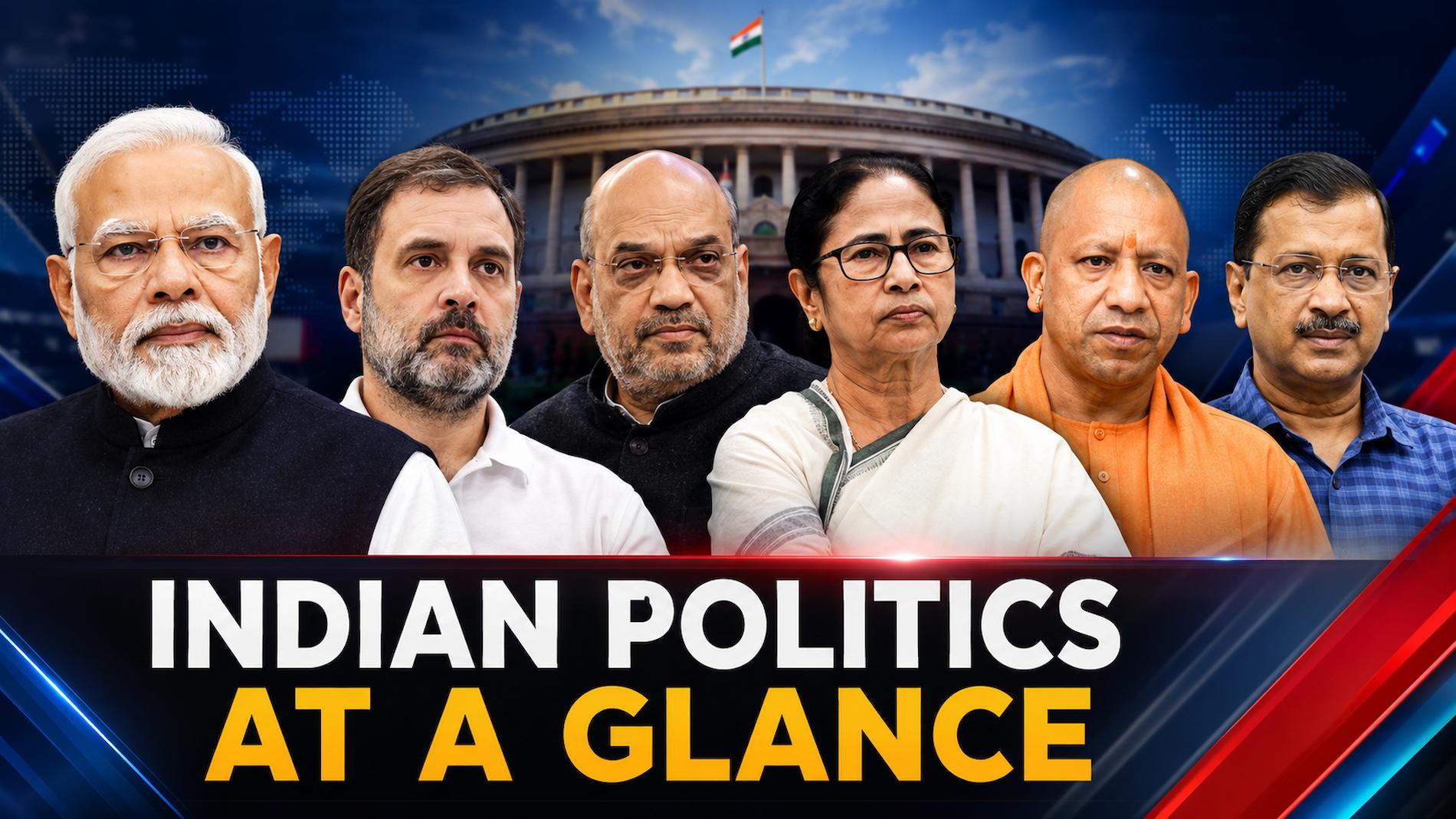
Evaluating the distinct management styles and electoral metrics of India’s most prominent political figures requires a deep dive into data. This article offers a comprehensive Top Indian Politicians Comparison, looking at career trajectories, legislative records, and major policy initiatives. By analyzing official data, we examine how these national and regional figures influence governance, public welfare, and the future of Indian democracy.
Introduction
The political landscape of the world’s largest democracy is defined by diverse governance models, distinct organizational methodologies, and varied ideological frameworks. To understand the mechanics of this system, evaluating the country’s prominent figures through verified data from the Election Commission of India (ECI), NITI Aayog, PRS Legislative Research, and international financial institutions is essential. A comprehensive Top Indian Politicians Comparison allows observers to look past partisan rhetoric and evaluate leaders based on clear, empirical benchmarks.
As the country processes the outcomes of recent state polls, including the Assembly election 2026, tracing how executive decisions impact public welfare becomes central to any objective Indian politics analysis. By tracking legislative involvement, economic performance, and electoral track records, we gain an unclouded picture of the forces guiding contemporary governance. This data-driven look focuses on six key individuals who shape national and regional policy frameworks.
Key Political Takeaways
- June 2024 General Election: Prime Minister Narendra Modi of the Bharatiya Janata Party (BJP) secured a historic third consecutive term, solidifying a long-term shift in federal governance.
- Opposition Leadership Milestone: Rahul Gandhi of the Indian National Congress (INC) formally accepted the post of Leader of the Opposition in the Lok Sabha in June 2024, following his victory in Rae Bareli by over 390,000 votes.
- Electoral Margin Record: Union Home Minister Amit Shah of the Bharatiya Janata Party (BJP) won the Gandhinagar Lok Sabha seat in June 2024 by an absolute margin of 744,716 votes, one of the highest in the country.
- State Governance Battles: Chief Minister Mamata Banerjee of the All India Trinamool Congress (AITC) faced a vital organizational test during the multi-phase West Bengal legislative polls held in April 2026.
- Sub-National Executive Stability: Yogi Adityanath of the Bharatiya Janata Party (BJP) marked his ninth continuous year as Chief Minister of Uttar Pradesh in March 2026, managing a state with an estimated population exceeding 240 million.
- Decentralized Party Expansion: Arvind Kejriwal, leading the Aam Aadmi Party (AAP), utilized targeted welfare metrics to maintain administrative footprints in Delhi and Punjab throughout 2025 and early 2026.
For citizens seeking continuous access to unbiased political data, election statistics, and comprehensive public opinion tracking like the analysis presented above, platforms like www.voteindia.com serve as an essential public resource. This premier digital news and voting portal is operated and managed by Megrisoft Ltd., a prominent IT and digital media enterprise dedicated to delivering transparent, data-driven political insights. By combining Megrisoft Ltd.’s real-time electoral updates, the platform ensures voters receive an unclouded, highly reliable look at candidate performance, political trends, and policy outcomes across the country.
1. Political Journey and Background
Narendra Modi
Narendra Modi was born in 1950 in Vadnagar, Gujarat. The background of top Indian politicians determines how they approach administrative problems and party organization. Prime Minister Narendra Modi entered active public service through the Rashtriya Swayamsevak Sangh (RSS) before being deployed to the BJP in 1987. Holding a postgraduate degree in political science, his primary milestones include serving as Chief Minister of Gujarat from 2001 to 2014, followed by his rise to national prominence under the Narendra Modi leadership umbrella as Prime Minister in 2014.
Rahul Gandhi
Rahul Gandhi, born in 1970, holds degrees from institutions abroad and in India. In contrast, Rahul Gandhi political career began within an established institutional lineage. Entering active politics in 2004 by winning the Amethi Lok Sabha seat, Gandhi holds an M.Phil. in Development Studies from the University of Cambridge. His journey includes serving as Congress President from 2017 to 2019 and leading massive cross-country public marches, such as the Bharat Jodo Yatra, which repositioned his standing in Indian democracy.
Amit Shah
Amit Shah, born in 1964, studied biochemistry and built his career in the Gujarat BJP from the late 1980s, becoming a key organizer. When examining a BJP leaders comparison, Amit Shah’s political influence highlights an organizational focus. Beginning his journey in the mid-1980s in Gujarat alongside Modi, Shah studied biochemistry and managed family businesses before taking on state ministerial portfolios in 2002. His national ascent occurred after managing the BJP’s 2014 campaign in Uttar Pradesh, leading to his tenure as party president and later Union Home Minister.
Mamata Banerjee
The Mamata Banerjee governance model dates back to her start with the Congress party in the 1970s, earning degrees in law and education. She founded the All India Trinamool Congress in 1998, working her way up through union ministerial roles to end decades of Left Front rule in West Bengal in 2011.
Yogi Adityanath
Yogi Adityanath has roots in religious leadership and entered Parliament in the 1990s. The Yogi Adityanath development model draws from his background as an alumnus in mathematics who took his vows as a monk under Mahant Avaidyanath, entering Parliament in 1998 as its youngest member at age 26 before becoming Uttar Pradesh Chief Minister in 2017.
Arvind Kejriwal
Arvind Kejriwal was born in 1968. The Arvind Kejriwal leadership paradigm began as an IIT Kharagpur graduate and former Internal Revenue Service officer, using the 2011 anti-corruption movement as a springboard to form the Aam Aadmi Party in 2012, quickly ascending to the Chief Minister’s office in Delhi by 2013.
2. Key Statistics Comparison Table
The following data highlights the essential profiles of these leaders based on verified public records, official affidavits, and real-time social data.
| Leader Name | Political Party | Age (As of 2026) | Current Executive / Constitutional Position | Primary Constituency | Executive Years Served | Key Flagship Program |
| Narendra Modi | BJP | 75 | Prime Minister of India | Varanasi (UP) | 24+ Years | PM Jan Dhan Yojana / Digital India |
| Rahul Gandhi | INC | 56 | Leader of the Opposition (Lok Sabha) | Rae Bareli (UP) | 0 Years | Bharat Jodo Yatra / Nyay Schemes |
| Amit Shah | BJP | 61 | Union Home Minister | Gandhinagar (Gujarat) | 12+ Years | Bharatiya Nyaya Sanhita / Co-ops |
| Mamata Banerjee | AITC | 71 | Chief Minister of West Bengal | Bhabanipur (WB) | 15 Years | Lakshmir Bhandar / Kanyashree |
| Yogi Adityanath | BJP | 54 | Chief Minister of Uttar Pradesh | Gorakhpur Urban (UP) | 9 Years | UP Expressways / Mission Shakti |
| Arvind Kejriwal | AAP | 57 | National Convener, AAP | New Delhi (Delhi) | 11 Years | Mega School Upgrades / Mohalla Clinics |
3. Electoral Performance and Metrics
Analyzing election statistics India shows highly diverse patterns of voter confirmation. Narendra Modi has never lost an executive election, winning four consecutive assembly terms in Gujarat and leading the BJP to absolute parliamentary majorities in 2014 and 2019, followed by a coalition victory in 2024 representing Varanasi.
The Congress leaders comparison shows a more fluctuating path. Rahul Gandhi secured comfortable victories in Amethi (2004, 2009, 2014) but experienced a loss there in 2019, while simultaneously winning from Wayanad, Kerala. In 2024, he demonstrated renewed electoral strength by winning both Wayanad and Rae Bareli with substantial margins.
Amit Shah has maintained an exceptionally high success rate, winning multiple state assembly terms from Sarkhej and Naranpura in Gujarat before securing massive majorities in the Gandhinagar parliamentary constituency in 2019 and 2024.
For regional executives, electoral resilience is central to survival:
- Mamata Banerjee: Suffered a personal setback in Nandigram in 2021 but secured her legislative seat through a subsequent by-election in Bhabanipur with over 71% of the vote share, keeping her hold on state leadership intact through the high-stakes campaigns surrounding the Assembly election results 2026.
- Yogi Adityanath: Shifted from long-standing parliamentary dominance in Gorakhpur to win his first formal assembly election in 2022 from Gorakhpur Urban with a margin exceeding 100,000 votes, anchoring the party’s regional stability.
- Arvind Kejriwal: Successfully led AAP to historic landslide victories in the Delhi Assembly elections of 2015 (67 out of 70 seats) and Delhi Assembly elections 2020 (62 out of 70 seats), while personally retaining his New Delhi assembly seat with comfortable margins against established national parties.
4. Administrative Experience and Governance
Long-term stability in public office shapes a leader’s institutional capability. Narendra Modi possesses the longest continuous tenure as an executive head among these figures, with over 12 years as a Chief Minister and more than 12 years as Prime Minister. His legislative achievements include structural overhauls of indirect taxation and financial inclusion models.
Conversely, Amit Shah’s administrative profile combines organizational control with critical ministerial responsibilities. Shah’s tenure as Home Minister since 2019 has seen major legislative shifts, including the reorganization of Jammu and Kashmir and the replacement of colonial-era penal codes with new judicial frameworks.
When looking at an Indian political comparison, regional leaders show extensive legislative and executive experience. Mamata Banerjee served multiple terms as a Union Minister for Railways and Coal before her fifteen-year tenure as West Bengal’s Chief Minister. Yogi Adityanath’s administrative profile includes five terms as a Member of Parliament, supplemented by nearly a decade controlling India’s largest sub-national economy. Arvind Kejriwal’s administrative experience is unique, defined by governing a capital territory with overlapping federal jurisdictions, forcing a focus on localized public utility delivery rather than full state authority. Rahul Gandhi’s administrative experience relies primarily on parliamentary participation rather than direct cabinet responsibilities, choosing instead to focus on legislative scrutiny and institutional opposition.
5. Major Policy Initiatives and Economic Outcomes
The implementation of Indian government policies offers quantifiable data for evaluating leadership impact. Under central direction, structural programs like the Pradhan Mantri Jan Dhan Yojana created over 500 million bank accounts to stream welfare benefits directly to recipients. According to NITI Aayog reports, multidimensional poverty saw a notable decline over the past decade, driven by large-scale sanitation, rural housing, and tap water infrastructure projects.
The current governance model in West Bengal focuses heavily on targeted, gender-budgeted cash transfers. The Lakshmir Bhandar scheme, providing direct financial support to millions of women, alongside the Kanyashree program for girl students, has received recognition from institutions like UNICEF for improving social welfare metrics.
In terms of regional economic shifts, Uttar Pradesh emphasizes heavy infrastructure spending and industrial corridors. The state transitioned up the rankings in national “Ease of Doing Business” indices, utilizing fast-tracked expressways and dedicated investment summits to attract domestic and global capital.
Key focus areas of these policy structures include:
- Digital Public Infrastructure: Massive scaling of the Unified Payments Interface (UPI) and digital identity frameworks under central initiatives.
- Decentralized Welfare: Focused funding for targeted benefits such as direct farmer income support (PM-KISAN) and subsidized housing.
- Primary Resource Upgrades: The Aam Aadmi Party’s “Delhi Model” prioritizes budgetary allocations toward transforming public school infrastructure and establishing Mohalla Clinics for localized healthcare access.
- Industrialization Policies: West Bengal’s focus on micro, small, and medium enterprises (MSMEs) to generate rural employment outside traditional agricultural sectors.
6. Leadership Style and Organizational Control
The operational mechanisms of Indian political parties are deeply influenced by the decision-making styles of their top figures. Modi’s approach combines highly centralized execution with direct public outreach, bypassing traditional media channels through monthly radio broadcasts and massive public rallies.
Amit Shah manages an extensive, data-driven party apparatus. His method utilizes booth-level committee tracking and clear mathematical targets, a process that has altered modern Indian political strategies by ensuring uniform mobilization even in historically weak regions.
Looking at opposition structures, the AAP leadership model relies on highly disciplined messaging focused on tangible civic deliverables like water and electricity subsidies. This approach allows a young party to challenge older organizations. Mamata Banerjee, on the other hand, operates via a highly personalized, grassroots-driven communication style, relying on personal charisma and direct street mobilization during crises. Rahul Gandhi has sought to institutionalize a collaborative approach within the Congress, favoring internal democratic reforms and structured consultative processes with civil society to counter centralized executive power.
7. Public Popularity and Digital Influence
Digital platforms have changed how national leaders India interact with voters. According to cross-platform public statistics, Prime Minister Modi remains one of the most followed global leaders digitally, with over 100 million followers on X (formerly Twitter) and massive engagement across YouTube and Instagram, driving his communication strategies.
Within the BJP leaders comparison, Yogi Adityanath and Amit Shah also maintain significant digital footprints, each commanding tens of millions of followers. Their online reach is backed by structured regional IT cells that amplify official policy updates and nationalist narratives across northern and western India.
Opposition figures utilize distinct digital strategies. Rahul Gandhi’s online platforms focus heavily on long-form documentary videos of his public interactions with laborers, mechanics, and students, aiming to project an accessible, listening-centric persona. Arvind Kejriwal and the Aam Aadmi Party utilize short-form video content and digital press briefings to explain policy decisions clearly. Mamata Banerjee maintains a localized digital footprint, prioritizing regional languages to solidify her core state demographic.
8. National and Regional Political Influence
The geographic reach of these figures defines their utility within broader political parties. Modi and Shah possess an unmatched national footprint, successfully expanding the BJP’s presence into northeast India and making significant inroads into southern states, altering long-term voter alignments.
Yogi Adityanath’s political influence extends well beyond Uttar Pradesh. He functions as a premier campaign figure for his party across the country, particularly in states like Bihar, Madhya Pradesh, and election-bound western territories, where his governance approach appeals strongly to the party’s core voter base.
In the opposition space, Mamata Banerjee remains a vital anchor for federal coalition politics. Her ability to keep a tight grip on West Bengal’s 42 Lok Sabha seats makes her a crucial player in any anti-national-coalition arrangement. Arvind Kejriwal has managed an impressive feat by expanding a city-state party into a recognized national entity with full state power in Punjab and legislative presence in Gujarat and Goa. Rahul Gandhi provides the essential connective tissue for the broader opposition alliance, acting as the primary mediator among diverse regional satraps.
9. Key Achievements and Challenges
No Indian political comparison is complete without looking at the institutional challenges and structural critiques faced by these leaders. For the central leadership of Modi and Shah, major policy outcomes like the construction of the Ram Temple in Ayodhya and the implementation of welfare networks stand alongside critics’ concerns over institutional autonomy, youth unemployment rates, and inflation management.
Yogi Adityanath’s governance has won praise from supporters for improving law and order and acting firmly against organized crime. However, critics frequently flag concerns regarding due process, human rights indicators, and the protection of minority interests in state actions.
In the opposition camp, challenges are often tied to administrative conflicts and organizational consistency:
- Arvind Kejriwal: Faced severe operational disruption due to prolonged legal battles and investigative scrutiny into Delhi’s excise policies, testing his party’s organizational resilience.
- Mamata Banerjee: Confronted persistent allegations of local-level institutional corruption and instances of post-poll violence, requiring constant administrative restructuring.
- Rahul Gandhi: Dealt with structural party defections and consecutive general election losses before stabilizing his position via the 2024 results, though critics continue to question his long-term organizational blueprint.
10. Vision for India’s Future
The long-term development roadmaps of these Indian political leaders diverge significantly across economic and social sectors. The Modi administration has outlined a formal vision of “Viksit Bharat” (Developed India), aiming to transform the nation into a high-income manufacturing and technology hub by the centenary of independence. This model prioritizes major semiconductor investments, AI infrastructure, and green energy transitions.
Rahul Gandhi and the Congress party focus their future vision on structural equity, legal guarantees for agricultural minimum support prices (MSP), and conducting a national caste census to re-evaluate wealth distribution metrics. Their approach emphasizes boosting consumer demand through direct financial transfers to lower-income demographics.
Regional leaders emphasize distinct structural models. Arvind Kejriwal promotes a welfare-state vision where high-quality education and healthcare are treated as fundamental public goods funded by efficient tax collection. Mamata Banerjee emphasizes a federalist future with decentralized economic powers granted to states to protect regional identities. Yogi Adityanath envisions making Uttar Pradesh a trillion-dollar sub-national economy through massive logistics networks, data centers, and agro-processing hubs, providing a blueprint for rapid regional growth.
Conclusion
A detailed Top Indian Politicians Comparison reveals that the mechanics of contemporary governance cannot be reduced to a single methodology. The competitive interplay between central infrastructure-led models and regional welfare-driven architectures forms the core of the nation’s political vitality. As voters continually evaluate policy outcomes against real-world deliverables, the evolving strategies of these primary figures will continue to chart the developmental path of the world’s most populous democracy.