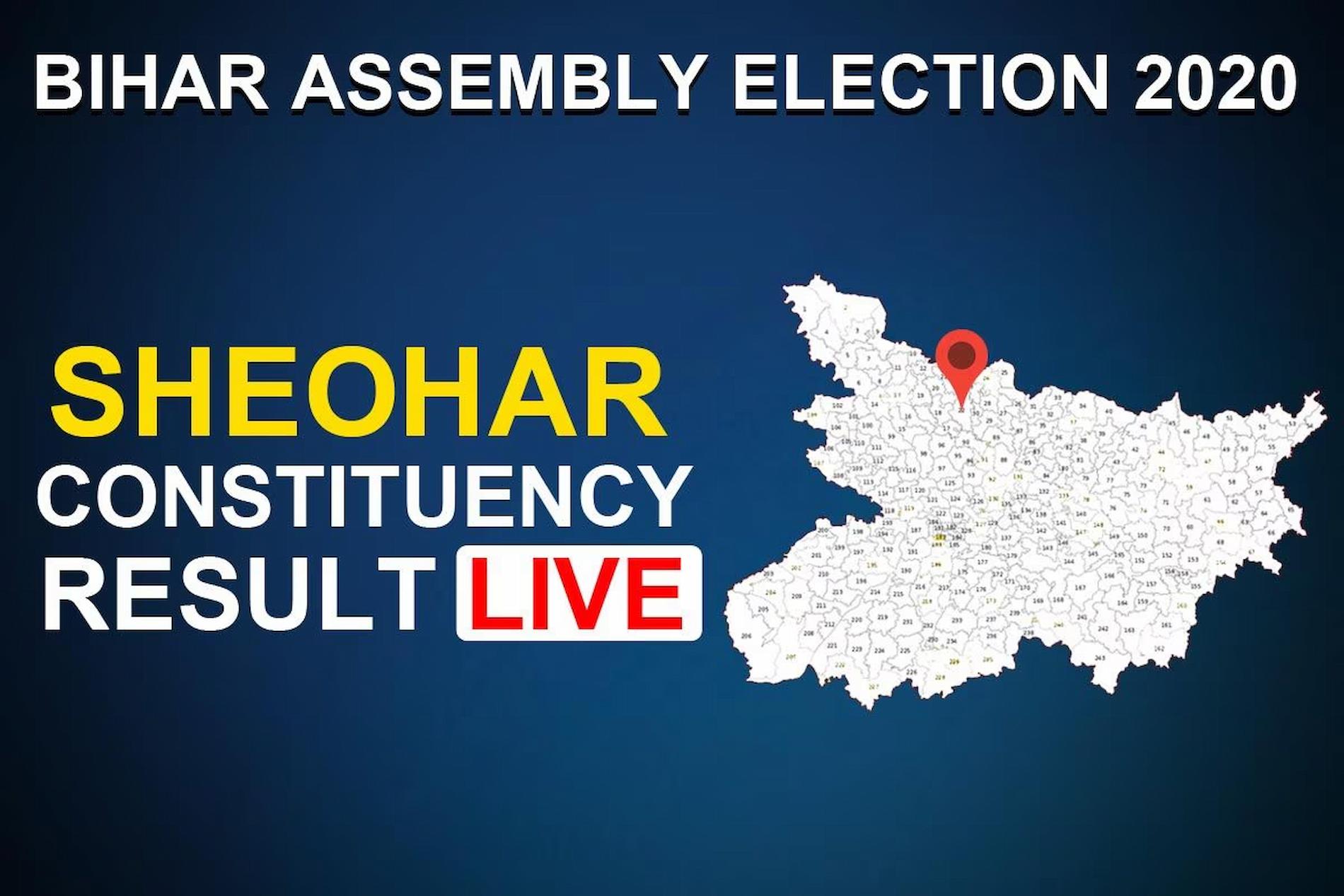
Sheohar Assembly Constituency (Vidhan Sabha) (Constituency No. 22), Bihar
Sheohar Assembly constituency, located in the Sheohar district of north Bihar, is one of the smallest yet politically active constituencies in the state. It serves as both a district headquarters and a rural-agrarian hub, balancing administrative importance with grassroots social dynamics. Bordered by Sitamarhi to the east and East Champaran to the west, Sheohar represents a crucial electoral microcosm of Mithilanchal politics, where development, caste configuration, and local leadership continue to shape outcomes. The seat will draw considerable attention in the Sheohar Assembly elections 2025, as political parties gear up to contest one of Bihar’s most closely watched constituencies.
Bihar Assembly Elections 2025
Sheohar Assembly Elections 2025 Voting Date
The Election Commission of India (ECI) has announced November 11, 2025, as the polling date for the Sheohar constituency, which will go to vote in the second phase of the Bihar elections.
Sheohar Assembly Elections 2025 Results
The counting of votes and declaration of results for the Sheohar 2025 Bihar Assembly elections were completed on 14th November 2025.
Sheohar constituency, coinciding with the declaration of outcomes for all Bihar Assembly seats.
Candidate List: Sheohar Assembly Elections 2025
| S.N. | Candidate | Party | EVM Votes | Postal Votes | Total Votes | % of Votes |
|---|---|---|---|---|---|---|
| 1 | NAVNEET KUMAR | Rashtriya Janata Dal | 65646 | 225 | 65871 | 31.35 |
| 2 | MD SHARFUDDIN | Bahujan Samaj Party | 16357 | 112 | 16469 | 7.84 |
| 3 | SHWETA GUPTA | Janata Dal (United) | 97081 | 188 | 97269 | 46.29 |
| 4 | AMRENDRA KUMAR | Bajjikanchal Vikas Party | 1464 | 0 | 1464 | 0.7 |
| 5 | NIRAJ SINGH | Jan Suraaj Party | 13880 | 72 | 13952 | 6.64 |
| 6 | PURUSHOTTAM KUMAR | GaribJanta Party Loktantrik | 1023 | 1 | 1024 | 0.49 |
| 7 | MAMTA KUMARI | Rashtriya Jansambhavna Party | 802 | 0 | 802 | 0.38 |
| 8 | ANISH KUMAR | Independent | 1100 | 0 | 1100 | 0.52 |
| 9 | PRAKASH KUMAR | Independent | 1363 | 0 | 1363 | 0.65 |
| 10 | VIJAYCHANDRA JHA | Independent | 4466 | 0 | 4466 | 2.13 |
| 11 | SANJAY SANGHARSH SINGH | Independent | 1488 | 1 | 1489 | 0.71 |
| 12 | NOTA | None of the Above | 4839 | 3 | 4842 | 2.3 |
| Total | 209509 | 602 | 210111 |
1. Foundational Details
- District: Sheohar
- Lok Sabha Constituency: Sheohar
- Constituency Number: 22
- Seat Type: Reserved for Scheduled Castes (SC)
- Total Electors (2020): Approximately 2.44 lakh
- Voter Turnout (2020): Around 59%
Geography and Administrative Divisions
The Sheohar Assembly constituency covers the Piprahi, Tariyani, and Purnahia community development blocks, along with Sheohar Nagar Panchayat. The region is largely rural and agrarian, characterised by fertile alluvial soil nourished by the Bagmati River. However, frequent flooding and poor drainage have long affected agriculture and infrastructure.
The district’s location along the Sitamarhi–Motihari corridor connects it to major highways and markets. Administratively, Sheohar functions as the district headquarters, making it the smallest independent district in Bihar, yet an important local administrative centre.
Economic Base
The economy of Sheohar depends mainly on agriculture, with paddy, wheat, maize, and pulses as the main crops. Sugarcane and vegetable cultivation also contribute to the local economy. Small retail trade, government employment, and remittances from migrant workers support household income. Limited industrialisation and a lack of agro-based processing units remain challenges.
Despite economic constraints, rural entrepreneurship and women’s self-help groups have grown through microfinance initiatives and state-led welfare schemes.
2. Electoral History and Political Background
Sheohar has witnessed competitive multiparty politics, with Janata Dal (United) (JD-U), Rashtriya Janata Dal (RJD), and Bharatiya Janata Party (BJP) emerging as the main contenders. The seat’s political narrative reflects frequent leadership shifts and fluctuating alliances, making it a key indicator of voter mood in the upcoming elections in Bihar.
Recent Election Results
YearWinning Candidate Party Runner-Up Party Margin (Votes)Turnout (%)
2020 Chetan Anand RJD Sharfuddin JD(U) 14,200 59.1
2015 Sharfuddin JD(U) Chetan Anand RJD 4,420 61.2
In the 2020 Bihar Assembly elections, Chetan Anand of the RJD won the seat, defeating Sharfuddin (JD-U) by over 14,000 votes. The victory was significant, as it ended JD-U’s previous hold and reaffirmed RJD’s resurgence in north Bihar. Chetan Anand belongs to a prominent political family—his father, Anand Mohan Singh, a former MP, has a longstanding influence in the region.
Historical Trends
Sheohar has alternated between RJD and JD-U over the past decade, reflecting voters’ focus on development, caste balance, and leadership accessibility. While RJD draws support from Yadav and Muslim communities, JD-U remains strong among Extremely Backward Classes (EBCs) and Scheduled Castes. The BJP’s presence, though limited, often plays a balancing role within alliance politics.
3. Social and Economic Fabric
Demographic Composition
- Population: Approximately 3.1 lakh (Census 2011 projection).
- Urban–Rural Ratio: Around 85% rural, 15% semi-urban.
- Gender Ratio: 922 females per 1,000 males.
- Literacy Rate: Around 58%, below the state average.
Major Communities and Castes
As a Scheduled Caste reserved seat, Sheohar’s social composition plays a major role in elections.
- Scheduled Castes: Dominate the electorate with Musahar, Chamar, and Paswan communities.
- OBC Groups: Yadavs, Koeris, and Kurmis influence results in mixed villages.
- Muslims: Form a sizeable minority, especially in Piprahi and Tariyani blocks.
- Upper Castes: Present in smaller numbers but influential in local trade and education.
Livelihood and Occupation
Most households depend on small-scale farming, labour, and migration income. Seasonal migration to cities like Delhi, Ludhiana, and Surat is common. Women’s participation in self-help groups has grown through schemes like JEEViKA, providing modest livelihood alternatives.
Sheohar’s electorate often responds to issues linked with agricultural security, flood control, and local employment generation.
4. Ground-Level Issues and Governance
Key Development Challenges
- Flooding and Drainage: The Bagmati River causes annual flooding, damaging crops and roads.
- Rural Infrastructure: Poor road networks, bridges, and irrigation canals hamper connectivity.
- Healthcare and Education: Limited hospitals and understaffed schools reduce access to basic services.
- Employment: Persistent job scarcity and migration highlight the need for industrial or agro-based investment.
- Public Welfare Delivery: While PDS and housing schemes have expanded, irregular implementation remains a concern.
Governance and MLA Performance
Since 2020, Chetan Anand (RJD) has prioritised flood relief, education facilities, and local infrastructure repair. State and central welfare schemes such as PM Awas Yojana, Jal Jeevan Mission, and Ujjwala Yojana have reached rural households.
However, limited employment generation and recurring floods continue to dominate public discourse. Local voters in Sheohar elections news emphasise expectations for transparent governance and consistent state intervention in irrigation and health services.
5. Political Actors and Party Dynamics
- RJD: Currently dominant, backed by OBC and minority voters, with strong leadership under Chetan Anand.
- JD(U): Remains competitive, relying on EBC and SC mobilisation through the Nitish Kumar-led governance model.
- BJP: Active in alliance coordination and urban polling segments.
- Congress and Others: Limited presence but occasionally impact margins in close races.
Campaign themes in the Sheohar elections 2025 are expected to revolve around flood management, rural employment, and governance accountability, with personality-driven politics influencing voter sentiment.
6. Strategic Electoral Analysis
The political competition in Sheohar is finely balanced. RJD’s consolidation among youth and minority voters gives it an advantage, while JD-U and BJP rely on the NDA’s welfare performance narrative. The constituency’s rural voter base often votes based on accessibility of local representatives rather than party ideology.
In 2020, higher turnout in rural booths favoured RJD, but JD-U remains strong in panchayats with extensive EBC presence. For the Sheohar candidates for the 2025 elections, outreach to women voters, first-time electors, and flood-affected families will be crucial.
Given its small size and border proximity, Sheohar’s voting patterns frequently echo regional trends in Sitamarhi and East Champaran, making it a barometer for political news in Bihar and political updates in Bihar.
7. Forward-Looking Analysis
Sheohar’s political trajectory reflects the aspirations of a developing agrarian district transitioning toward better connectivity and civic amenities. As Bihar emphasises inclusive growth, Sheohar’s electorate increasingly values visible development, job creation, and education access over traditional caste considerations.
The upcoming contest during the Bihar Assembly elections 2025 will likely centre on flood control, employment, and local governance performance. With both ruling and opposition alliances strengthening their base, Sheohar will be a closely monitored seat in the Upcoming elections in India.
As voters engage with promises of change, welfare efficiency, and infrastructure delivery, Sheohar’s outcome may reflect the wider Bihar constituencies‘ trend that defines the political pulse of North Bihar ahead of the Bihar assembly election 2025 date.
FAQs About Sheohar Assembly Constituency
What is the reservation status of the Sheohar Assembly constituency?
Sheohar Assembly constituency holds a Scheduled Caste (SC) reserved status, meaning the field of candidates is restricted exclusively to individuals belonging to the Scheduled Castes. This reservation ensures representation for the SC community, which comprises a significant portion of the electorate within the district. Geographically, the constituency primarily encompasses diverse rural communities spread across Sheohar district. The seat’s reserved nature is a key factor in its political landscape, dictating candidate eligibility for the legislative elections.
Who is the current MLA of Sheohar?
The incumbent Member of Legislative Assembly (MLA) for Sheohar is Chetan Anand, a prominent young leader representing the Rashtriya Janata Dal (RJD) party. He secured his position in the 2020 Assembly elections, where he successfully defeated the Janata Dal (United) or JD(U) candidate, Sharfuddin. His victory marked a significant win for the RJD in the constituency, following a competitive electoral battle. Chetan Anand’s current tenure places him at the forefront of the region’s political developments and legislative representation.
Which Lok Sabha constituency does Sheohar fall under?
Sheohar Assembly constituency is an integral part of the larger Sheohar Lok Sabha (parliamentary) constituency, which is a key political unit in the region. This parliamentary seat is geographically extensive, covering not only Sheohar district but also incorporating adjacent areas from the nearby districts of Sitamarhi and East Champaran. Representation at the central level is thus drawn from this broader regional block, influencing the overall political strategy and focus on cross-district issues.
What are the major issues in Sheohar?
The constituency is plagued by several pressing infrastructure and development concerns that consistently dominate the voters’ agenda. Perennial flooding during the monsoon season remains the most significant natural disaster and infrastructure challenge. Other major issues include the persistent scarcity of local job opportunities, the need for better rural road connectivity, and weak healthcare infrastructure across the district. Given the nature of these long-standing issues, irrigation and education are anticipated to be the central themes in the Sheohar Assembly elections of 2025.
How has the political trend evolved in Sheohar?
Sheohar’s political history is characterised by a notable pattern of alternation in power, primarily shifting between the Rashtriya Janata Dal (RJD) and the Janata Dal (United) (JD-U). This swinging trend indicates a politically dynamic and less predictable voter base in the region. Most recently, the shift has pointed toward a preference for performance-driven governance and the rise of youth-oriented politics. Voters appear to be increasingly focused on tangible development outcomes and new leadership over rigid, long-standing party loyalty.
What drives Sheohar’s economy?
The foundational elements of Sheohar’s economy are rooted in agriculture, supplemented substantially by government sector employment and vital remittances. The region’s economy heavily leverages its location on fertile floodplains for farming. Local farmers primarily engage in cultivating staple crops such as paddy (rice), maize, and sugarcane, which are crucial for the district’s economic output and the livelihood of the majority of the population.
What could shape the next election in Sheohar?
The outcome of the upcoming 2025 Assembly contest in Sheohar is expected to hinge critically on three core factors. Effective flood management and mitigation strategies will be paramount, directly impacting the lives of the agrarian population. Furthermore, the perceived efficiency of welfare scheme delivery and the overall leadership credibility of the competing candidates will significantly influence voter sentiment. As a key seat in the broader Bihar election news cycle, Sheohar’s result will provide essential insights into the current mood and priorities of voters across the state’s constituencies.