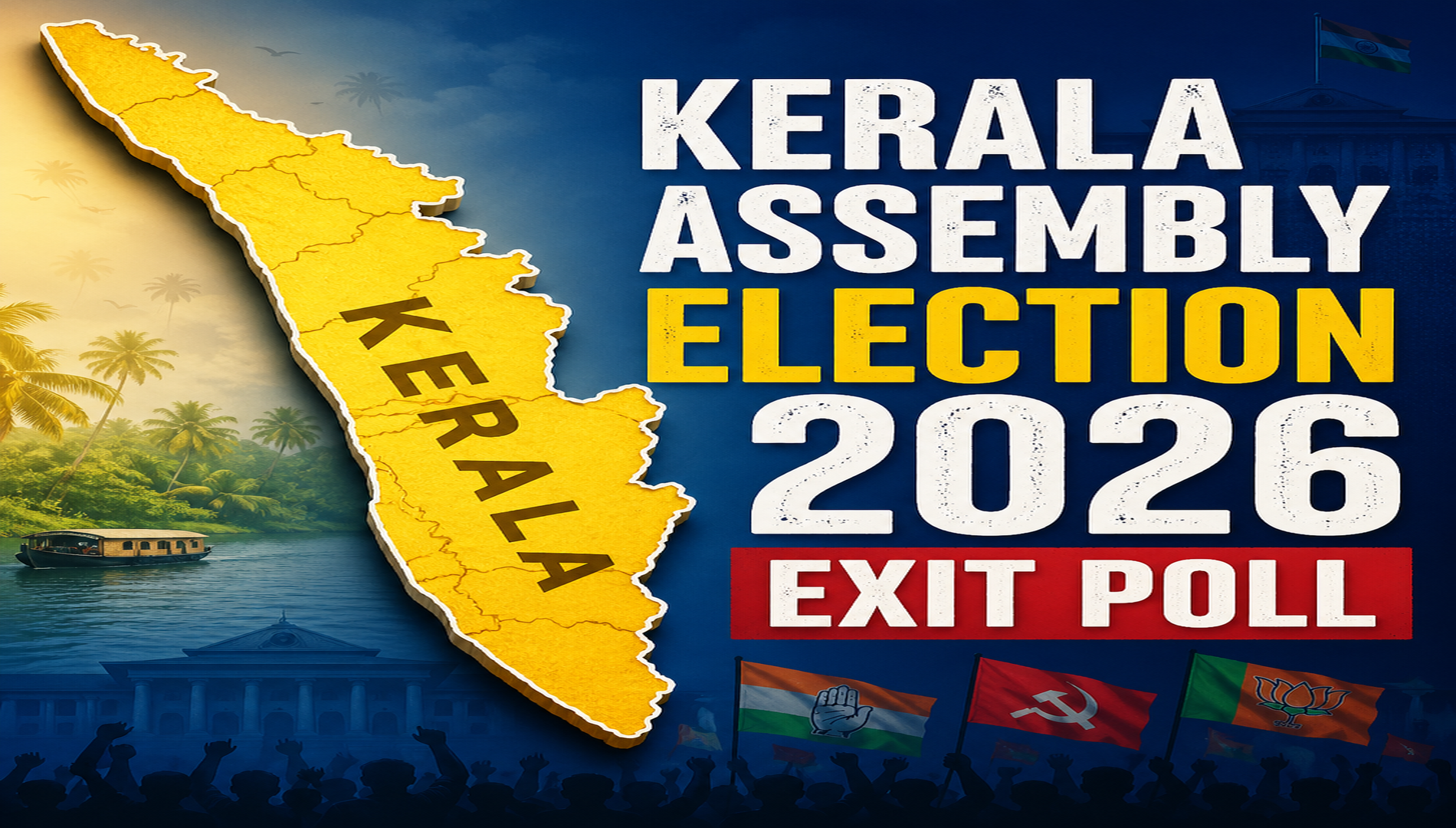
The Kerala Assembly Election 2026 Exit Poll has reshaped the state’s political mood, with major surveys projecting a decisive UDF return after ten years. Exit poll trends suggest anti-incumbency may weaken the LDF, while the NDA remains marginal. As Kerala awaits May 4 counting, the state could witness a dramatic governance reset.
Introduction
The 2026 Kerala Assembly Election Exit Poll has emerged as one of India’s most politically significant developments, with multiple leading surveys indicating a major comeback for the Congress-led United Democratic Front after a decade in opposition. Exit polls released after 6:30 PM IST on April 29, 2026, following Election Commission embargo rules, suggest Kerala’s electorate may be preparing to end Pinarayi Vijayan’s Left Democratic Front government after two consecutive terms. According to Manorama News-CVoter and other major pollsters, UDF appears positioned comfortably above the 71-seat majority mark in the 140-member assembly. If these projections hold on May 4, Kerala may return to its historical pattern of alternating governments. However, Kerala’s political history also warns against treating surveys as final verdicts, making the counting day crucial for all three fronts.
Kerala Assembly Election 2026 Exit Poll: Release Date and Election Rules
The Election Commission of India prohibited exit poll broadcasts until all voting phases concluded nationally. As a result, official Kerala exit poll 2026 figures were released only after 6:30 PM IST on April 29, 2026. Polling across Kerala’s 140 constituencies concluded the same day.
The official Kerala counting day, May 4 2026, will determine whether these projections become a political reality.
Headline Seat Projection: UDF Takes Clear Lead
The strongest narrative from the current Kerala election survey results is a projected UDF comeback.
Manorama News-CVoter Mega Exit Poll
- UDF: 82–94 seats
- LDF: 44–56 seats
- NDA: 1–3 seats
With Kerala’s majority mark fixed at 71 seats, these figures suggest UDF may return to power decisively.
Axis My India and Times Now-JVC also show UDF ahead, though margins vary. Still, the broad trend indicates a Congress-led advantage.
Vote Share Estimates Reveal UDF Momentum
Beyond seats, vote share estimates underline the shift in voter sentiment.
Estimated Vote Share
- UDF: 43–44%
- LDF: 38–39%
- NDA: 14%
This gives UDF an approximate 5-point lead over LDF. In Kerala’s tightly contested political ecosystem, that margin is highly significant.
Political Parties Kerala: Alliances and Major Leaders
The political parties in Kerala’s landscape remain structured around three fronts.
UDF
The Congress-led alliance includes:
- Indian National Congress
- Indian Union Muslim League
- Kerala Congress factions
LDF
Led by CPI(M), the ruling alliance includes:
- CPI(M)
- CPI
- JD(S)
- NCP factions
NDA Kerala Election 2026
The BJP-led NDA includes:
- BJP
- BDJS
Key Politicians in Kerala in Focus
Several major politicians, Kerala shaped this election:
- Pinarayi Vijayan led the LDF’s defence.
- V. D. Satheesan became UDF’s central strategist.
- Rahul Gandhi remained influential, especially in Wayanad.
- K. Surendran led NDA’s campaign.
Why Anti-Incumbency May Have Hurt LDF
After ten years in office, LDF appears vulnerable to voter fatigue. Economic stress, rising prices, youth unemployment, and governance scrutiny reportedly shaped public opinion.
Kerala’s educated electorate often prioritizes administrative performance. This election may reflect demand for a policy reset rather than ideological rejection.
Historical Context: Kerala’s Political Pendulum
Kerala has historically alternated between UDF and LDF every five years.
However, LDF broke this tradition in 2021 by winning consecutive terms. The current Kerala legislative assembly elections could restore that old electoral pendulum.
This makes 2026 particularly historic. If UDF wins, it reinforces Kerala’s reputation for cyclical accountability.
Regional Battlegrounds That Could Decide Final Margins
Different regions remain critical to understanding Kerala state election trends.
Key Battleground Zones
- Malabar belt
- Central Kerala Christian-majority districts
- Coastal constituencies
- Thiruvananthapuram
- Palakkad
Thiruvananthapuram and Palakkad remain NDA watch zones, though the BJP’s statewide seat prospects remain limited.
Bullet Point Section: Where UDF Appears Strongest
- Central Kerala districts with Christian voter influence
- Coastal constituencies facing economic distress
- Congress-friendly minority belts
- Anti-incumbency-heavy urban constituencies
Bullet Point Section: LDF and NDA Core Challenges
- LDF facing fatigue after decade-long rule
- Economic governance under scrutiny
- BJP’s vote share stable, but seat conversion weak
- NDA remains structurally limited despite aggressive campaigns
NDA Kerala Election 2026: Marginal but Stable
Despite energetic campaigning, NDA Kerala election 2026 projections remain modest. Most surveys place NDA between 1 and 3 seats.
Still, a 14% vote share suggests BJP may be building ideological pockets, particularly in Thiruvananthapuram and Palakkad.
This distinction matters. While seat wins may remain scarce, organizational consolidation could influence future elections.
Congress Revival Narrative Gains Strength
A UDF victory would carry significance beyond Kerala. It would support the broader national story of Congress revival in southern India.
For Rahul Gandhi and the Congress leadership, Kerala could become a strategic morale booster ahead of future parliamentary contests.
Kerala Political News Today: Can Exit Polls Be Trusted?
While the Kerala poll 2026 projections strongly favour UDF, caution remains essential. Kerala has historically delivered unexpected constituency-level surprises.
Close contests, tactical voting, and alliance arithmetic can reshape outcomes. Exit polls are directional, not definitive.
This is why Kerala political news today remains focused on May 4 rather than April 29 alone.
Cracks in Left’s Final Bastion?
For national political observers, Kerala remains one of the Left’s last major strongholds. A substantial LDF defeat would raise questions about Left resilience beyond state boundaries.
If UDF’s projected margin materializes, this election may symbolize not just regime change but a larger governance referendum.
Kerala Counting Day, May 4 2026: What Happens Next?
All projections now face the test of actual counting. On May 4, constituency-by-constituency results will determine whether UDF’s projected lead converts into a stable government.
If UDF crosses 82 seats, it would represent one of its strongest mandates in years.
Conclusion
Kerala’s 2026 election may mark a significant political turning point. Exit polls suggest voters could be preparing to restore UDF while ending a decade of Left governance. Yet Kerala’s electoral complexity demands caution until official counting confirms the numbers. The final verdict will reveal whether voter sentiment truly signals change or whether the state once again defies expectations.