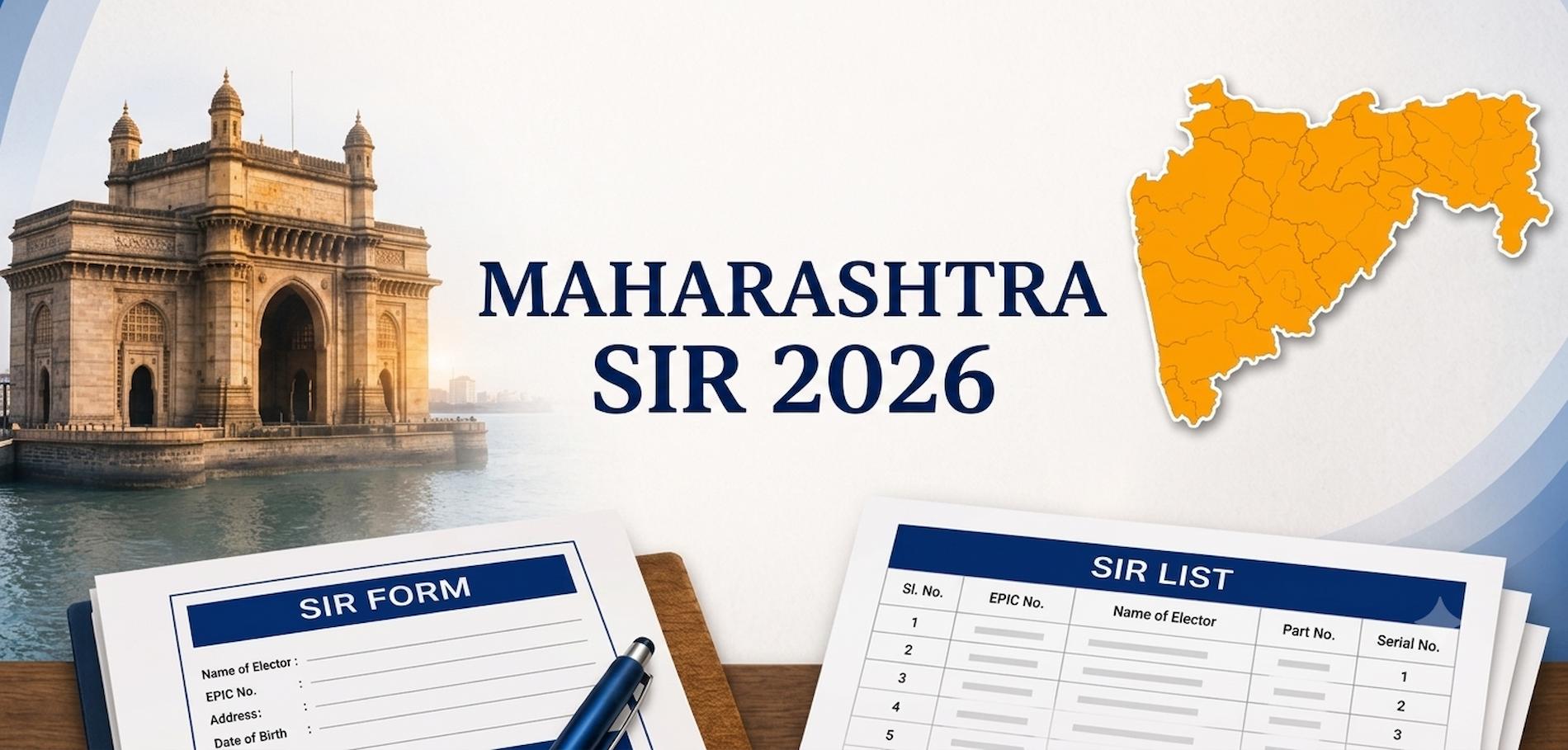
Maharashtra SIR 2026: 2 Crore Voters at Risk
Maharashtra’s Special Intensive Revision has put more than 2 crore voter records under scrutiny before the August 24 draft roll. With a significant share concentrated in Mumbai, the exercise has raised questions about verification, urban mobility, and safeguards for eligible voters whose names may be missing from the first revised list.
Maharashtra SIR 2026 has reached a critical stage, with more than 2 crore electors expected to be left out of the August 24 draft electoral roll after their enumeration forms could not be collected or processed during the verification exercise. Maharashtra has around 9.78 crore electors, and reports indicate that roughly 7.71 crore, or 78.82%, have been digitized.
The scale of the exercise has made voter verification a major political and administrative issue. The most important distinction is that exclusion from a Maharashtra draft electoral roll 2026 does not automatically mean permanent deletion from the final electoral roll. Eligible voters whose names are missing can use the claims and objections process to seek correction and inclusion.
Takeaway: Six Key Developments
- More than 2 crore forms: Maharashtra’s SIR exercise has left approximately 2.07 crore enumeration forms uncollectable, placing those records at risk of being absent from the August 24, 2026, draft roll.
- State electorate: The exercise covers around 9.78 crore electors, of whom approximately 7.71 crore, or 78.82%, have reportedly been digitized.
- Mumbai remains a major concern: Earlier reporting put the number of untraced voters in Mumbai at around 30 lakh, while later reporting and the latest headline figure cited about 36 lakh. The exact figure should always be read with its reporting date because verification numbers are changing.
- Key dates: House-to-house enumeration and verification concluded on August 17, 2026, while the draft electoral roll is scheduled for publication on August 24, 2026.
- Political concerns: Congress and opposition leaders have raised concerns about eligible voters being left out, while the BJP has emphasized voter-roll accuracy and the removal of ineligible, duplicate, deceased, or shifted entries. NCP (SP) MLA Rais Shaikh has also questioned the implications of the large number of uncollected forms.
- Claims remain available: Missing from the draft roll is not the end of the process. Eligible voters can seek inclusion through the prescribed claims and objections procedure before the final electoral roll is prepared.
Why More Than 2 Crore Voters Could Miss the Draft Roll
The central figure in the latest Maharashtra Special Intensive Revision is the approximately 2.07 crore voter forms classified as uncollectable. This represents a substantial share of Maharashtra’s electorate and explains why the August 24 draft publication is being closely watched.
According to the figures reported during the verification process, approximately 7.71 crore voter records had been digitized, representing 78.82% of the electorate. The remaining cases require further attention because the enumeration form could not be collected or the voter could not be satisfactorily verified at that stage.
This does not mean all these electors have been declared ineligible. It means their names face possible exclusion from the first draft unless their status is resolved through the prescribed process.
What Does “Uncollectable” Actually Mean?
The term can be misunderstood. An uncollectable form does not automatically establish that a voter is dead, a duplicate, permanently shifted, or otherwise ineligible.
Possible reasons include:
- The voter was unavailable during house-to-house verification
- The voter had shifted from the recorded address
- The address was outdated or incomplete
- The premises were locked during the verification visit
- The voter could not be contacted
- The form was not returned or completed
- Other record or verification issues required further resolution
This distinction is central to understanding Maharashtra voter exclusion. A record may be absent from the draft because verification was incomplete, but an eligible voter can still seek inclusion during the subsequent process.
Mumbai’s Large Share Draws Attention
Mumbai’s voter records have become one of the most closely watched parts of the statewide exercise. Reports published on different dates have produced different figures as enumeration and verification progressed.
A Times of India report published on August 12 said around 30 lakh voters in Mumbai and approximately 1.8 crore statewide were untraced at that stage. Subsequent reporting and the latest headline under discussion place the Mumbai figure at approximately 36 lakh, illustrating how the numbers can change as officials update their records.
Why Is Mumbai Especially Difficult to Verify?
Mumbai’s urban population creates administrative challenges that differ from many rural areas. Possible reasons for a large number of unverified records include:
- High population mobility
- Frequent changes in rented accommodation
- A large migrant workforce
- High-rise residential complexes that are difficult to cover
- Voters remaining registered at previous addresses
- Internal movement within the Mumbai Metropolitan Region
- Difficulty completing door-to-door verification within the available period
These factors should not be presented as proof of voter fraud or irregularities. They are possible administrative explanations that require individual verification.
August 17 and August 24: The Dates That Matter
The final stage of house-to-house verification was extended until August 17, 2026. The extension reflected the scale of the pending work and the large number of voter records requiring further checks.
The next major date is August 24, 2026, when the Maharashtra SIR voter list in draft form is scheduled to be published.
What Happens After the Draft Roll?
The process does not end with publication of the draft list:
Enumeration → Draft Roll → Claims and Objections → Verification → Final Electoral Roll
This is an important safeguard. Voters who believe their names have been wrongly omitted can apply through the established electoral procedure and provide the required information or documents.
For this reason, describing every uncollectable record as a completed case of Maharashtra voter deletion would be inaccurate. The draft stage and the final electoral roll serve different purposes.
Maharashtra SIR 2026: Latest Key Numbers
| Particular | Latest Reported Figure |
|---|---|
| Maharashtra electorate | About 9.78 crore |
| Digitized voters | About 7.71 crore |
| Digitization rate | 78.82% |
| Uncollectable forms | About 2.07 crore |
| Mumbai untraced voters in earlier reporting | About 30 lakh |
| Mumbai figure in latest headline/reporting | About 36 lakh |
| Enumeration deadline | August 17, 2026 |
| Draft electoral roll | August 24, 2026 |
The Times of India also reported that approximately 34.96 lakh voters in Vidarbha were part of the uncollectable pool, showing that the issue extends well beyond Mumbai.
Because the Maharashtra voter list update remains part of an ongoing process, each figure should be read alongside the date on which it was reported.
Political Parties Watch the Verification Process Closely
The scale of the SIR has inevitably created political debate because electoral rolls directly affect voter participation.
BJP Focuses on Roll Accuracy
The BJP has generally supported efforts to improve the accuracy of voter rolls and identify entries involving voters who have died, shifted permanently, or appear more than once. Any specific allegation or current statement from Maharashtra BJP leaders should, however, be attributed to the party and supported by the latest available report.
The central administrative issue is whether the revision can improve accuracy without wrongly excluding eligible electors.
Congress Raises Concerns About Exclusion
Congress has raised concerns about the possibility that eligible voters could be left out during large-scale verification exercises. The party’s position should be presented as its political and electoral concern rather than as an independently established finding.
The demand for adequate physical verification and sufficient opportunities for correction is particularly important where voters were unavailable during the initial enumeration period.
NCP (SP) Questions the Large Uncollected Pool
NCP (Sharadchandra Pawar) MLA Rais Shaikh has questioned the implications of having more than 2 crore uncollected voter forms. His objections highlight a central question surrounding the revision: how many of the voters currently missing from the verification process are eligible electors who can still establish their status?
This debate is likely to continue after the draft roll is published.
Shiv Sena and Shiv Sena (UBT)
The positions of the ruling Shiv Sena and Shiv Sena (UBT) should be treated separately. They are distinct political parties with different leadership and political positions, and any statements on the electoral revision must be individually attributed.
Why the Mumbai Figure Has Political Significance
The number of voters facing possible draft-roll exclusion in Mumbai is politically important because of the city’s large electorate and the significance of its Assembly constituencies.
A change affecting several lakh voter records can become a major issue for political parties, particularly in areas with high migration and frequent residential movement.
The key questions after the draft roll is released will include:
- How many previously unverified voters apply for inclusion?
- How many claims are accepted after verification?
- Which areas report the highest number of omissions?
- How quickly can errors be corrected?
- Are voters adequately informed about the claims process?
The answers will provide a clearer picture than the current uncollectable figure alone.
What Voters Can Do If Their Names Are Missing
Voters should not wait until the final stage to check their electoral status. After publication of the draft, they can use official facilities provided by the Election Commission of Maharashtra and the Chief Electoral Officer, Maharashtra, to search voter records and understand the applicable correction process.
Those seeking inclusion or correction should follow official instructions and submit the relevant application within the prescribed period.
The most reliable sequence for voters is:
- Check the draft roll after publication
- Confirm whether the name and details are correct
- Contact the relevant electoral authority or Booth Level Officer if necessary
- Submit the prescribed claim or correction application
- Follow the official status until the record is resolved
This makes the post-draft claims stage as important as the enumeration process itself.
Conclusion
Maharashtra’s voter-roll exercise has produced an unusually large verification challenge, with more than 2 crore records potentially missing from the first draft list and Mumbai accounting for a substantial share of the cases. The August 24 draft publication will provide the next major picture of the exercise.
However, the draft is not the outcome. The accuracy of the final roll will depend on how effectively eligible voters can verify their records, file claims, and correct omissions during the next stage.
Check your electoral status promptly and use official channels to correct any missing or inaccurate voter information.